2011. szeptember 10., szombat

Plate Arcs from Japan


These pyramidal crystal halos were observed by Anthelene over Sakaiminato city in West Japan. The most interesting features of this high cloud display are the 9°, 20°and 24° plate arcs. Marko Riikonen has made a simulation with HaloPoint2.0 ( 1 ), according to him, the 20° plate arc had been photographed only once or twice in high clouds before. More of Anthelene's images can be seen on her website: http://bluemomenttime.blog89.fc2.com/blog-entry-442.html

2011. június 21., kedd

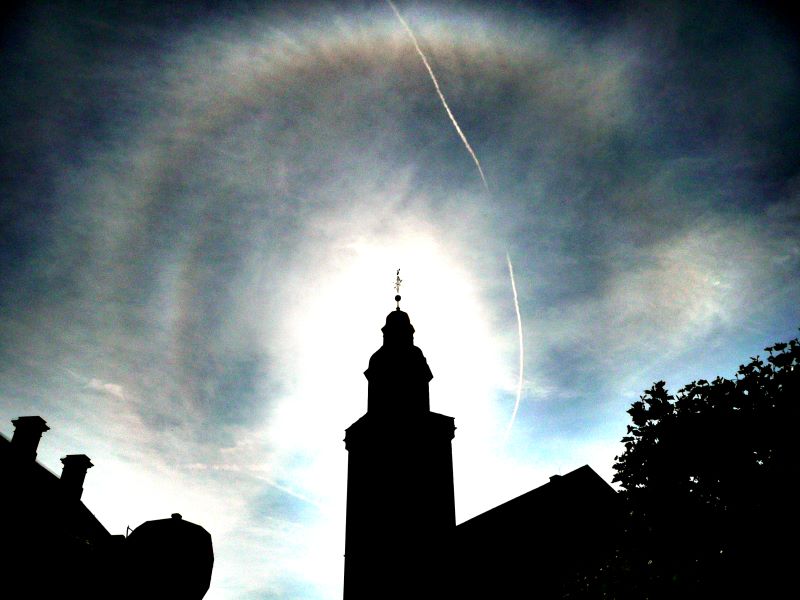
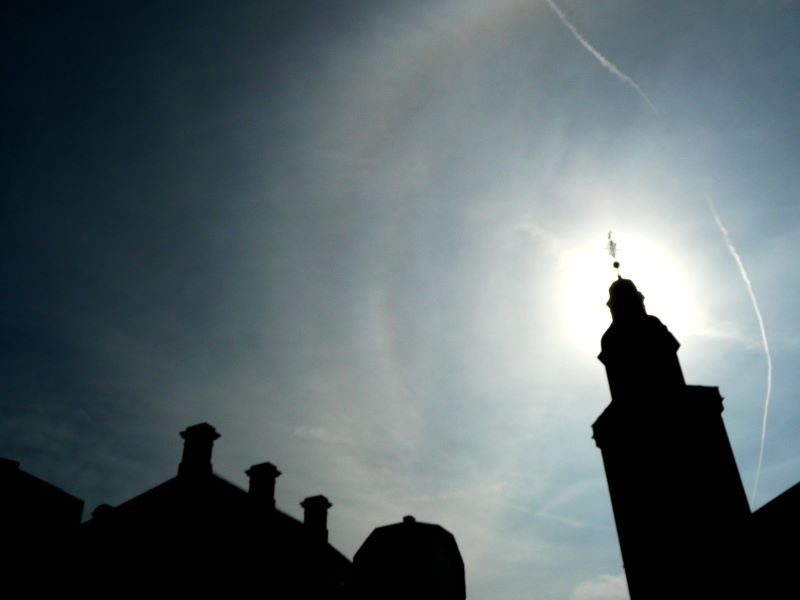
Pyramidal halos over Frankfurt am Main

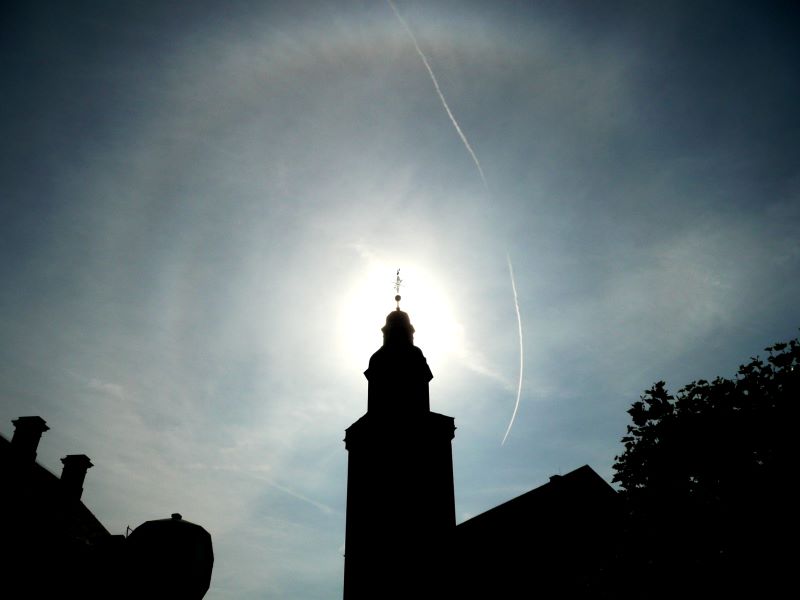
Andreas Zeiske observed a pyramidal halo on 6 June 2011 in Frankfurt am Main. In the images, the 22° halo, 18° halo and the left 18° lateral arc can be seen about the St.-Katharinen-Church. The phenomenon formed on a thin field of Cirrus clouds and lasted for 10 minutes at around 08.00 CET. About 5 hours later a cold front with rain showers and thunderstorms swept across the city of Frankfurt. ( 1 - 2 )

Andreas Zeiske, Germany

2011. június 12., vasárnap

Atmospheric Phenomena Blog

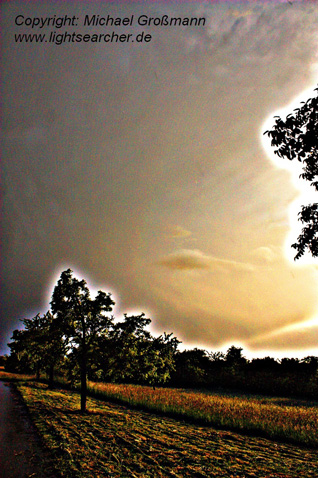
The blog on atmospheric optics has moved to a new address ( 1 ), and has recently been updated with many interesting observations. As a teaser, Michael Großmann's image of a tertiary order rainbow can be seen on the right.

2011. június 7., kedd

Pyramidal halo from Thailand


The above image was photographed by Pitan Singhasaneh on 5 June in Bangkok, Thailand.

2011. június 5., vasárnap

Simultaneous upper tangent arc and rainbows


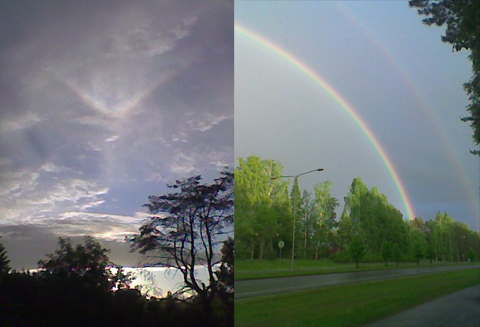
On 4 June 2011 Pietari Puranen observed these rainbows in Jyväskylä. When he turned around to see the sky around the sun, he observed an upper tangent arc. Remarkably, the arc formed in virga precipitating from the same low clouds around the rainbow forming cumulonimbus. It is rare to see halos in virga so close to rainbows.

As column crystals are formed in temperatures relatively close to 0 degrees Celsius we may assume the Virga has been born in temperatures around, say, -4 to -9 degrees Celcius. At least in those temperatures diamond dust close to the ground seems to most often exhibit column crystals.

2011. június 2., csütörtök

Double sun effect


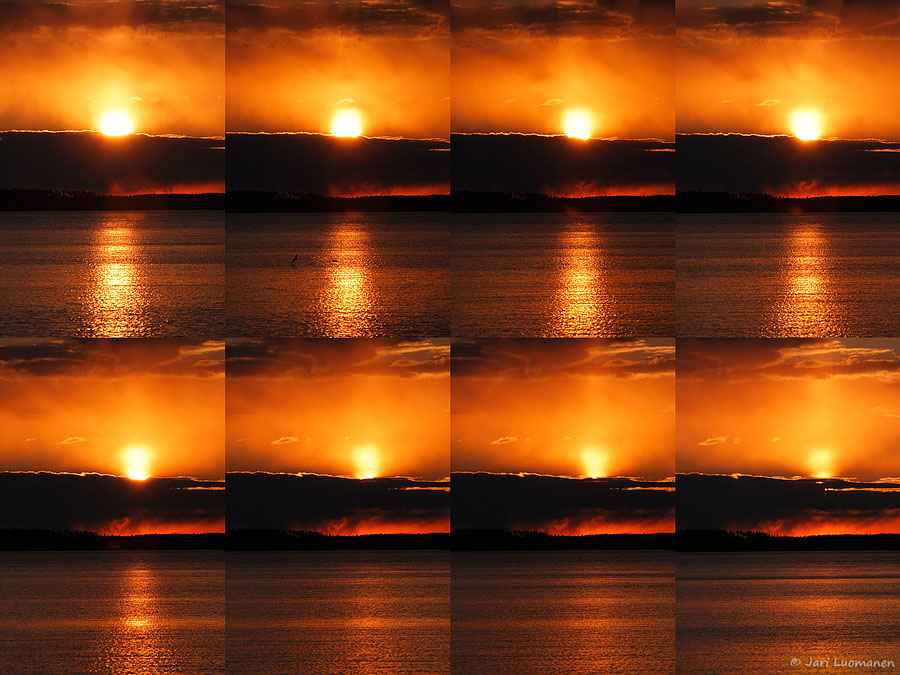
On May 1st 2011 cumulonimbus clouds precipitating hail were commmon. These clouds exhibited clear praecipitatio and later in the evening they featured prominent virga. In these virga a sun pillar formed and as the sun descended behing stratocumulus a double sun effect was seen. A series of images is provided to see the progression of the effect. The real sun can be seen descending behing the stratocumulus.

The first observation of this effect was by Giovanni Cassini in 1693 (see e.g. Riikonen 2011 (1)). By clicking the above image a larger version can be seen. A full image gallery is available online (2). Marko Riikonen also captured images from the other side of the lake (3).

2011. június 1., szerda

Halos 31. May - summary of the month's halos

[gallery columns="5" orderby="title"]

Altocumulus virga usually makes pillars. On rare occasions other halos are also seen in it. Yesterday Ac turned into virga for several hours and in the beginning unconventional halos were seen in it: upper tangent arc, circumzenith arc and also short patch of 46° supralateral arc. Parhelion occurred on one shot occasion in contrail. It is getting to look like parhelia in contrail are not that rare after all.

  • parhelion

  • 22° upper tangent arc

  • 46° supralateral arc

  • circumzenith arc


Anyways, this is it. For one month I tried to see every halo possible. I am not going to continue photographing all displays, will just mark up the halos. Next it is time to see what kind of statistics I got for this one month.

Ok, the numbers for May. Halos occurred on 27 days and for individual halos the numbers are:

  • 22° halo - 16 days

  • pillar - 16 days  (including one borderline case)

  • parhelion - 15 days

  • 22° tangent arc - 15 days (upper tangent arc in all and in three also lower)

  • circumzenith arc - 6 days

  • parhelic circle - 2 days

  • 120° parhelion - 2 days

  • 46° lateral arcs - 2 days (supralateral on both, infra on the other)

  • 46° halo - 1 day

  • 9° halo - 1 day


I actually saw cza only on 5 days, but missed pretty certainly one when I was inside. Jari observed that one and I also saw parhelia in that cloud when it had already passed overhead. The numbers above are meant to be absolute numbers of halos, so I added that cza because I most certainly would have seen it had I been outside half and hour earlier or so.

Sofar the halo statistics people have made mostly reflect what they happen to see when they look up. Here I tried to see every halo during the day. I woke up in the morning to see the sunrise and stayed up untill sunset on most days. It became evident that pillars and also parhelia are often seen in very low sun situations in the high cloud bank at the horizon. It may very well be that 22° halo is not the most common halo in Finland, but rather pillar is. 22° halo should have stronger position in the summer when sun spents plenty of time at high elevation when pillar can not be seen, but pillar should gain the upper hand towards the winter when sun is low and when also low level crystals make just pillars. So, as even in the summer month of May the pillar was equal to 22° halo, I would expect in the year's run the pillar be the most numerous halo.