[gallery link="file" columns="5"]
This display was a result of low Stratus turning into ice crystals. It was right on when I arrived with car to the scene, which made me regret my idling in the comfort of indoors. The nucleating agent was the ice dust from Mustavaara snowguns. Essentially this created a punch hole in the cloud layer. All around this few kilometers wide opening it was overcast. Moon was three days short of full and an all sky plate crystal display was seen. The best of the crystal swarm moved back and forth and I tried to follow it with car.
2010. december 2., csütörtök

2010. november 29., hétfő
Halo display from Upper Bavaria

- 22deg halo
- left and right parhelia
- upper and lower tangent arc
- upper and lower sun pillar
- circumzenithal arc
- 46deg halo
- parhelic circle
- upper, lower and circular Lowitz arcs
- Anthelion
- 120deg parhelia
- supralateral arc
- infralateral arc
- upper suncave Parry arc
- subsun
- left and right subparhelia
- Wegener anthelic arc
- Hastings anthelic arcs
- upper and lower Tape arcs (46deg Parry)
- heliac arc
- subhelic arcs
- Moilanen arc
The types of halos and their brightness sometimes changed within minutes.
Location and weather situation:
The halo phenomena occured in the Sudelfeld, which is a mountain saddle at an altitude of ca. 1100 m. Low stratus clouds drawing in from the Inn River valley dissolved there and fell out in ice crystals. The Sudelfeld being a popular skiing resort, this morning two snow making machines ("snow guns") were also working, but shut off near 11 o'clock. Jari Luomanen suggests that the snow gun produced nucleation agents also took part in the nucleation process of the stratus which then continued even after the guns stopped operating.
Claudia Hinz
2010. november 19., péntek
Moon halos from Mustavaara ski resort

It's better to be inside a punch hole cloud than just look at it. On the night of 17/18 November snow guns seeded a punch hole in low stratus cover at Mustavaara ski resort in Eastern Finland. Plate crystal dominated halo display appeared in the resulting diamond dust. Temperature on the ground was -9° C. In the image above, moon elevation is 32.7°.
Marko Riikonen
2010. november 10., szerda
Superb Lowitz and helic arcs from the USA
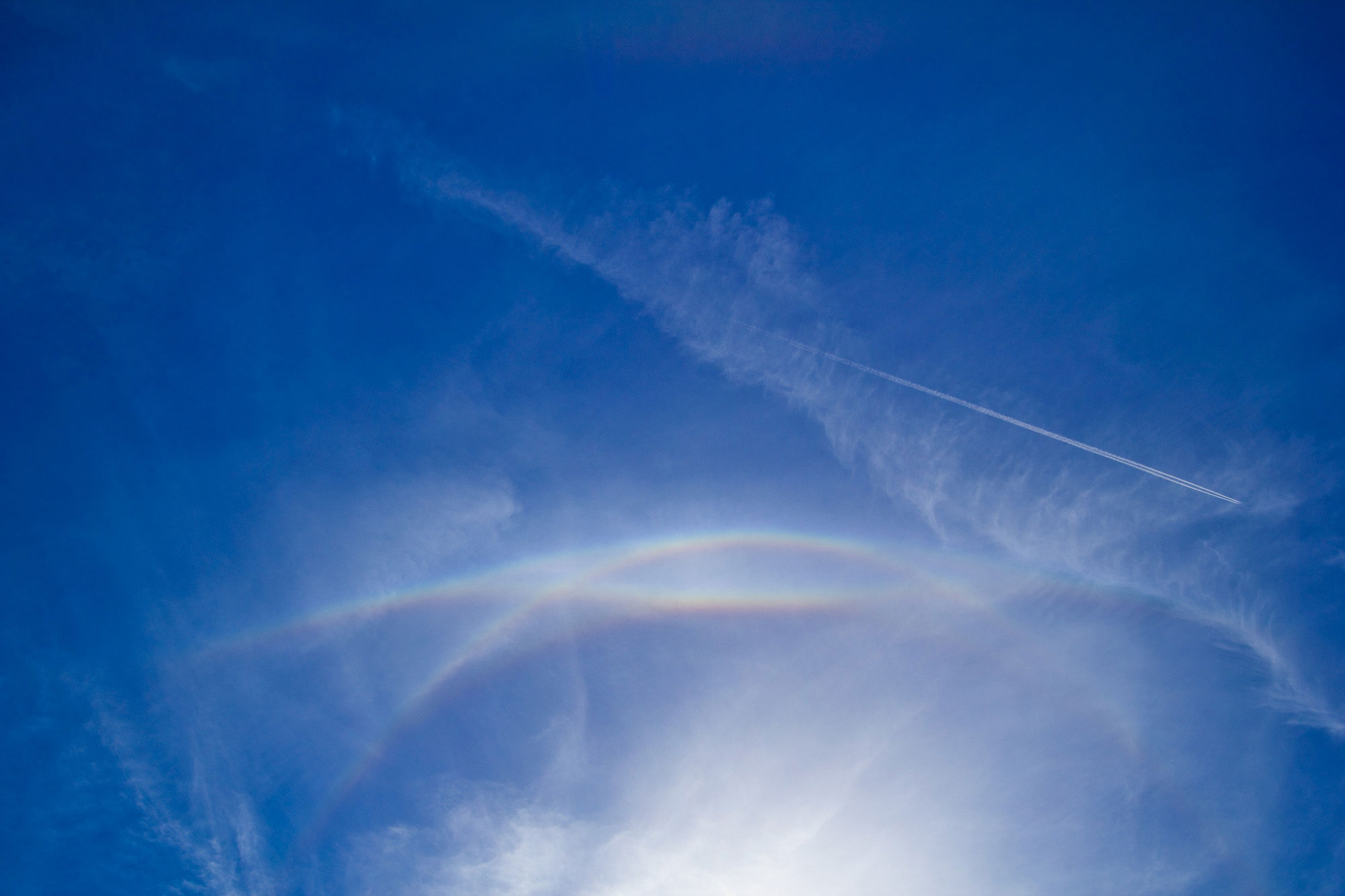
I soon was seeing "sun dogs" on the parhelic circle. I then was clearly seeing the Wegener arc inside the parhelic circle. It was very vivid as with my eyes I could clearly see the rainbow colors. To be honest I never did see the Heliac arc before. I was flipping through pictures inside later and it simply jumped out. I was like, what is that arc..then looked it up.
The top of the 22 degree halo visually looked crazy most of the time. Very clear and colorful and odd arcing. I thought it was just an intense circumscribed arc in there but it didn't look placed right and like more was happening. ( 1 - 2 - 3 - 4 - 5 )
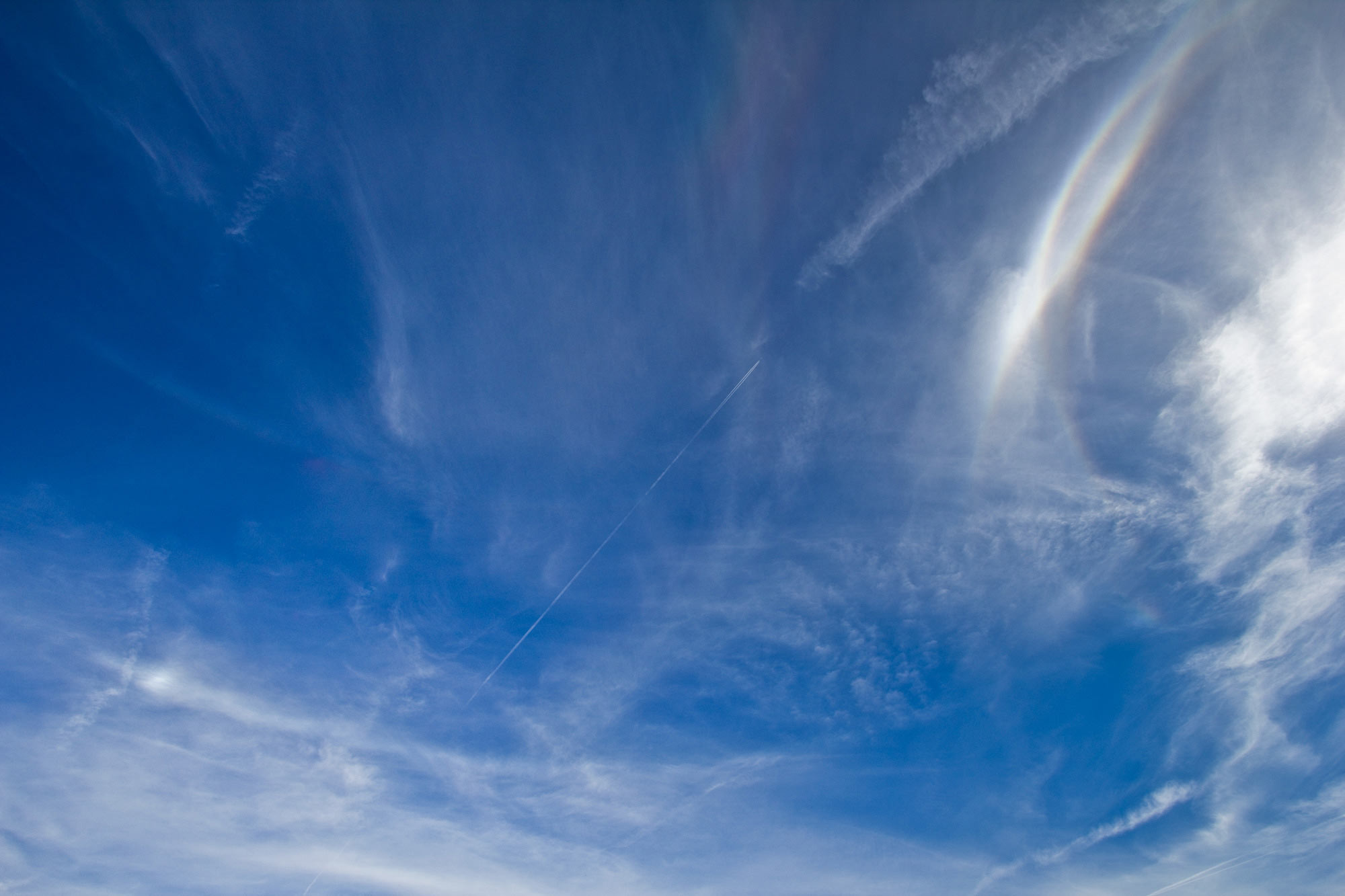
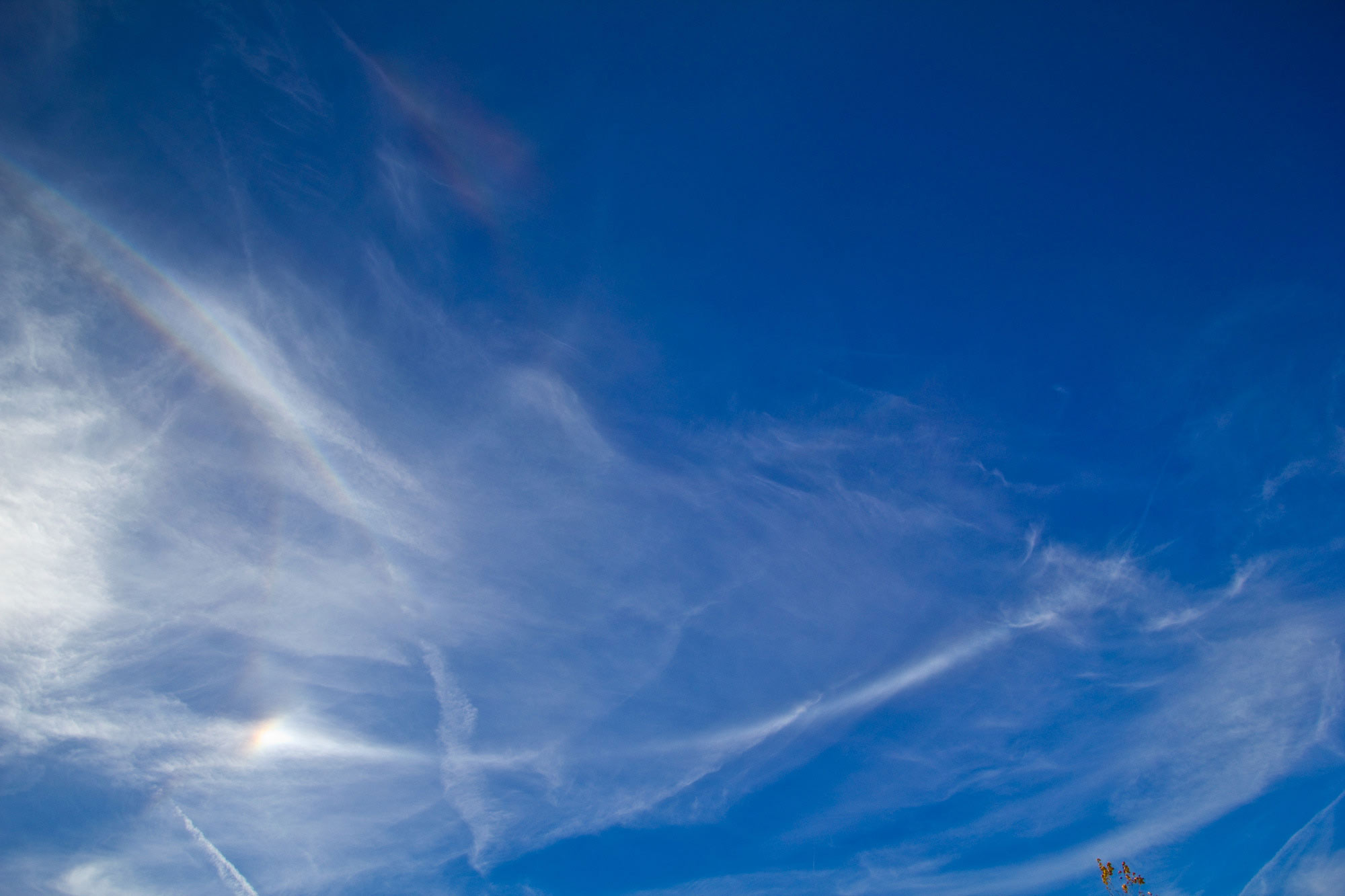

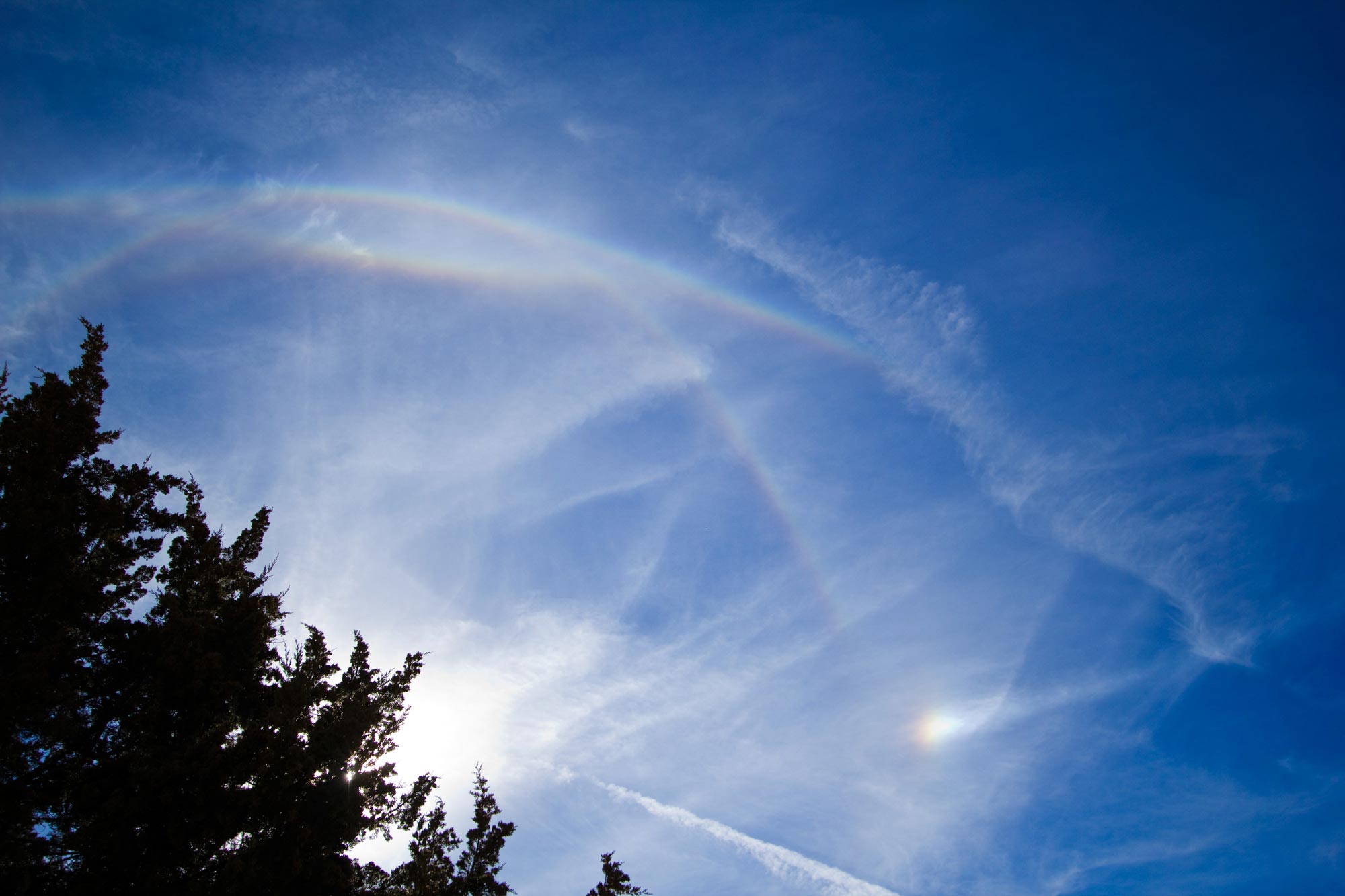
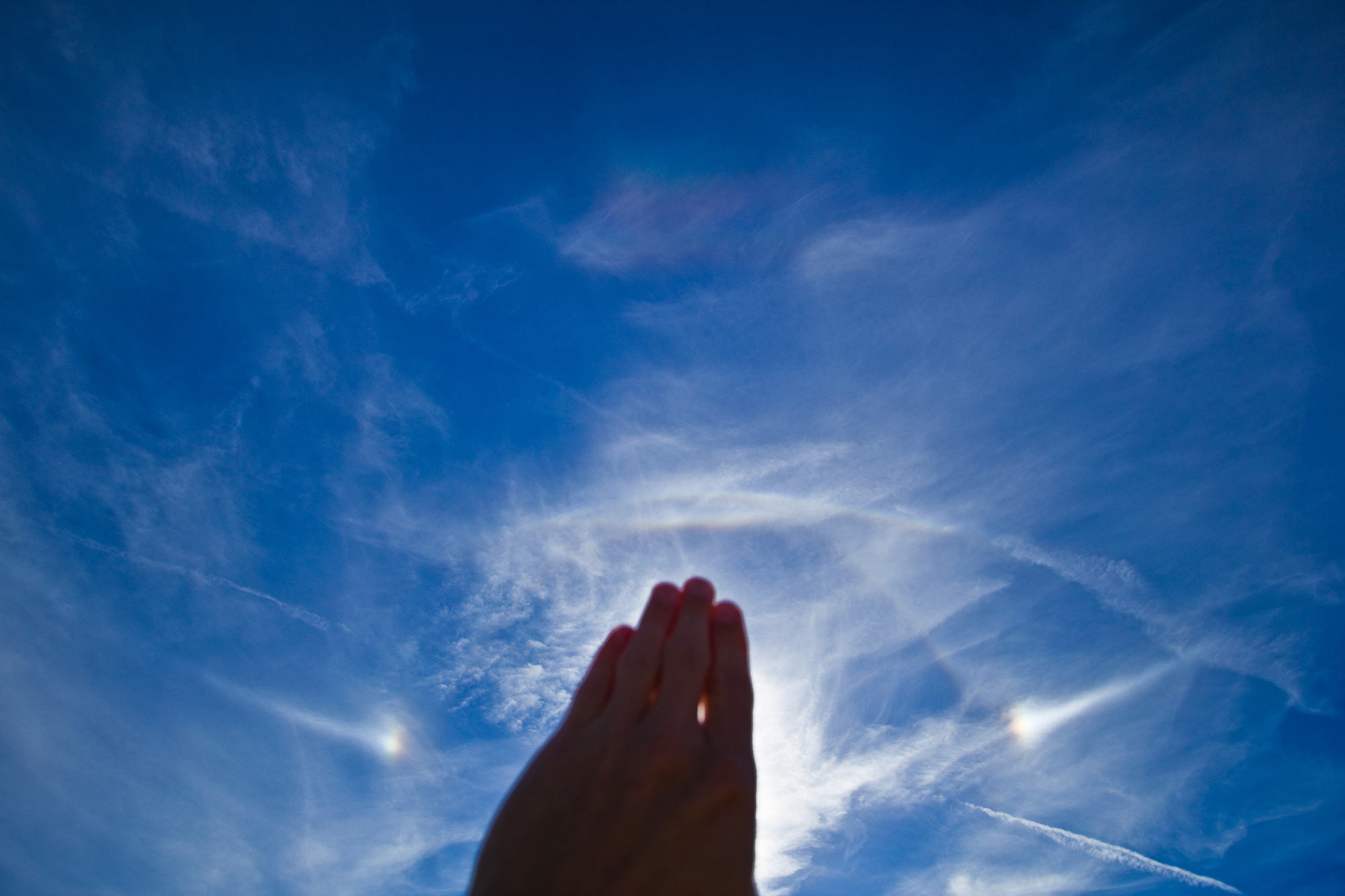
The show only lasted 30-40 minutes I'd guess. Then it was pretty hard to get any optics at all. What was strange was visually nothing much was changed about the sky. I was watching for hours so there were different periods of less contrail garbage blocking out the sun. I had friends in Omaha, 20 miles south, and Lincoln another 45 miles south of that, looking too. They never saw anything good. They watched till sunset too, but they also didn't get out as soon as I was and that was the best part. I wonder what I missed before I got out.
The satellite loop for that day may give the key ( 6 ). I'm located in eastern NE which is at the top center. It was much like the crystals you get right behind a blizzard in air just where it is clearing behind the storm. You can see a more puffy nature to the clouds, they pass and the ice crystals are left in the air. That stuff on satellite is below typical cirrus level/flight level...but still up there. It for sure was different than normal cirrus. A lot of that "cirrus" in the shot is left over form all the contrails. Once the sun got lower you could see the moisture/clouds clearly below the contrails. So anyway, probably worth noting the clouds coming across at the time were more along the lines of mid-level clouds/moisture.
Mike Hollingshead
2010. október 30., szombat
Superb diamond dust display in Austria

On 18 October 2010 a superb diamonddust halodisplay was observed at the meteorological station Sonnblickobservatorium ( 1 ) in the Austrian Alps (3106 m, 12°57’ E, 47°03’ N). Hermann Scheer, member of the meteorological team at the observatorium, took images of 13 different haloforms between 08:30 and 09:00 CEST (06:30 and 07:00 UT): parhelia, 22°-halo, 46°-halo, lower tangent arc, subsun, subparhelia, infralateral arc with Parry-infralateral arc, supralateral arc, parhelic circle, subparhelic circle, subhorizon Wegener arc and helic arc. ( 2 - 3 - 4 - 5 - 6 ) The images were taken at a sun elevation of 8,9° to 10,3° between 08:31 and 08:40 CEST, the file names indicate the exact time.
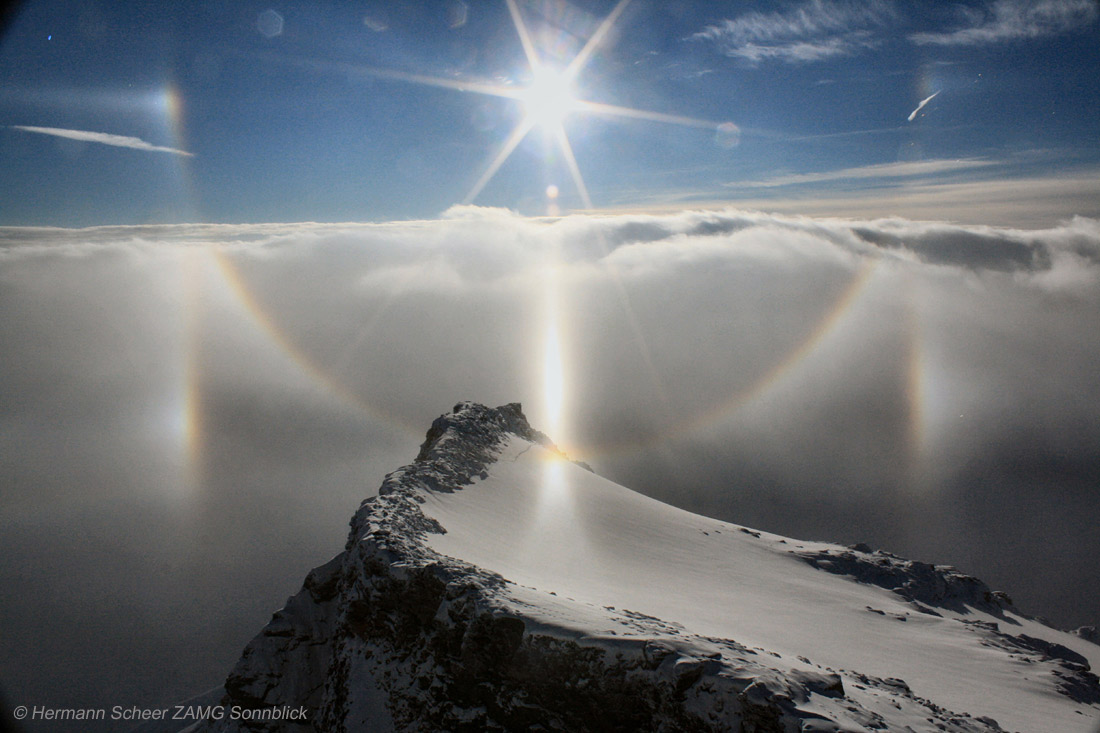
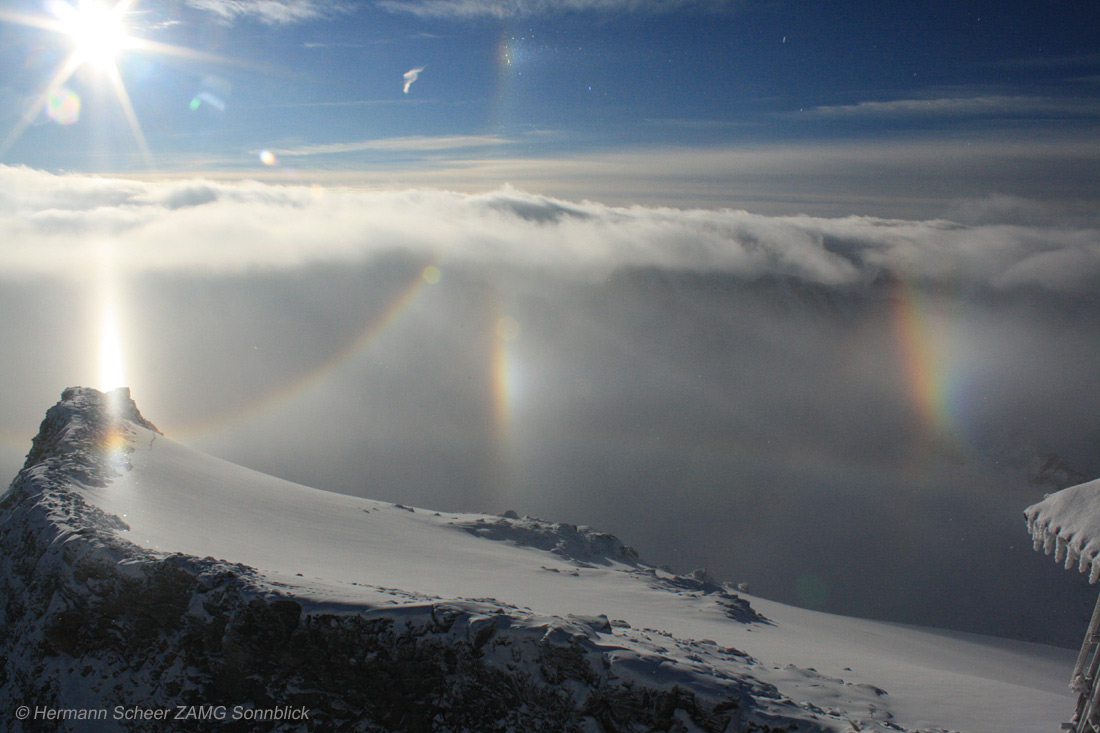
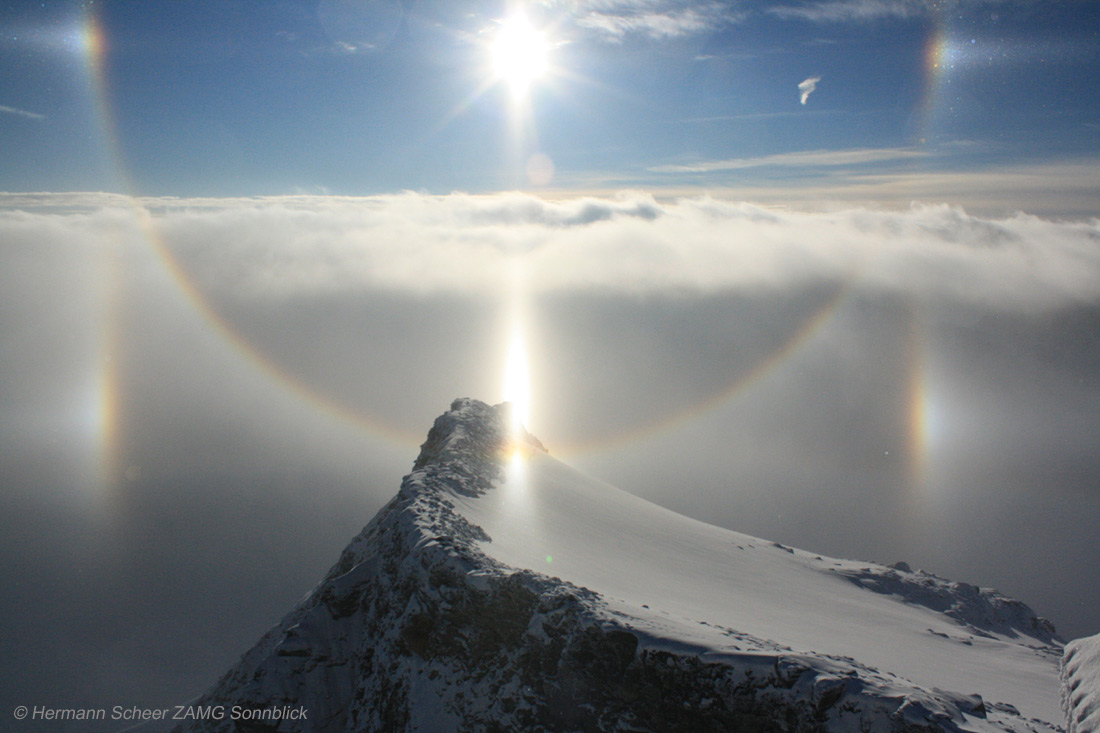
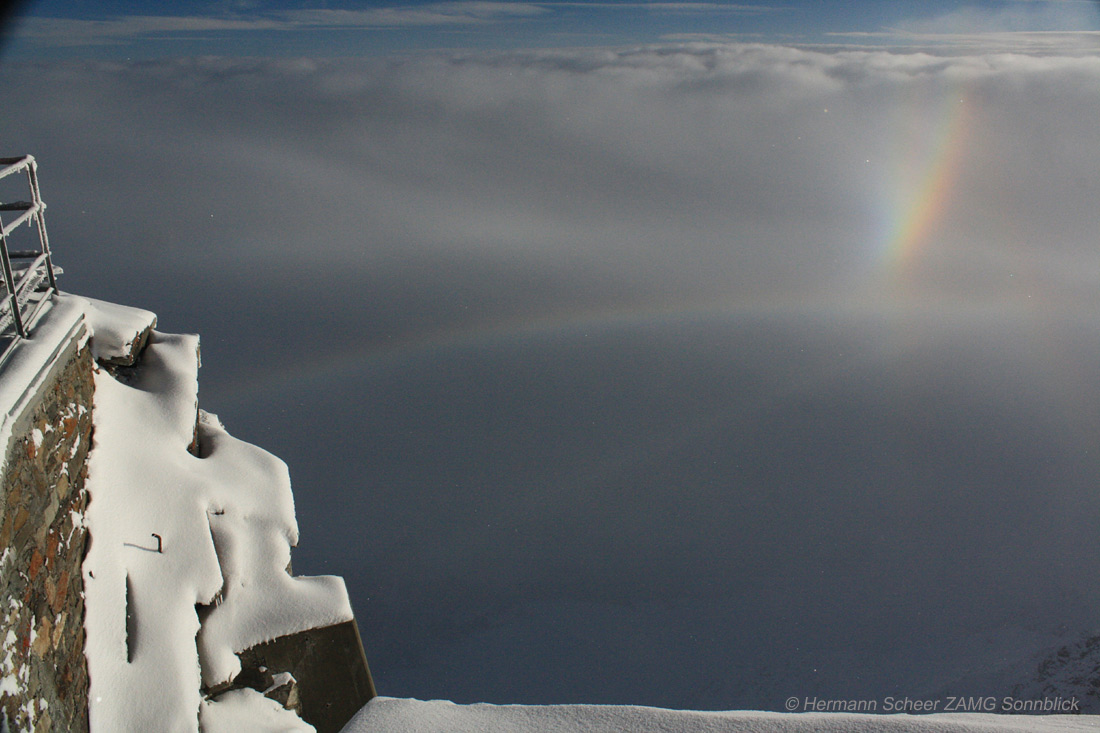
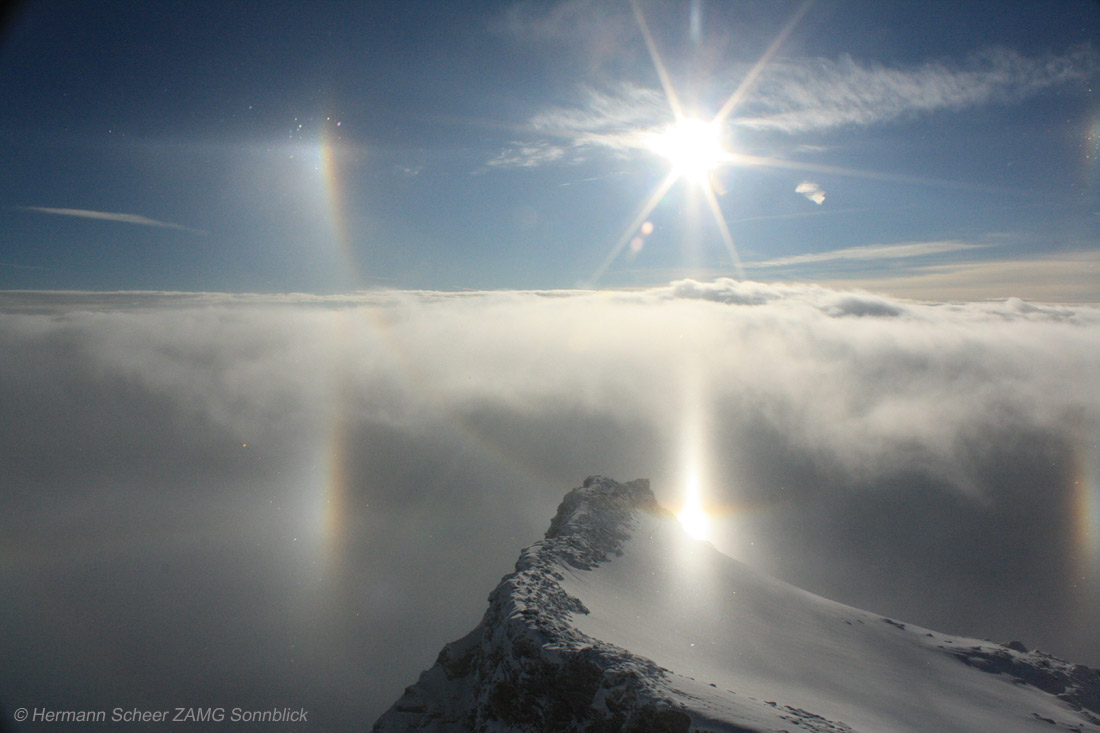
The brightness of the Wegener arc was incredible. Very interesting is the combination of Parry-infralateral arc with infralateral and faint supralateral arc. This part of the phenomenon is similar to an observation in the Czech Republic (26th of December, at Lysa hora in Krkonose (Giant Mountains)), described at Optické Úkazy v Atmosférè ( 7 - 8 ) Thanks to Tomas Trzicky for the links. And also in Ice Crystal Halos ( 9 ). In this very small area of the display we can see a 46°-halo, Wegener arc, helic arc and the subparhelic circle too.
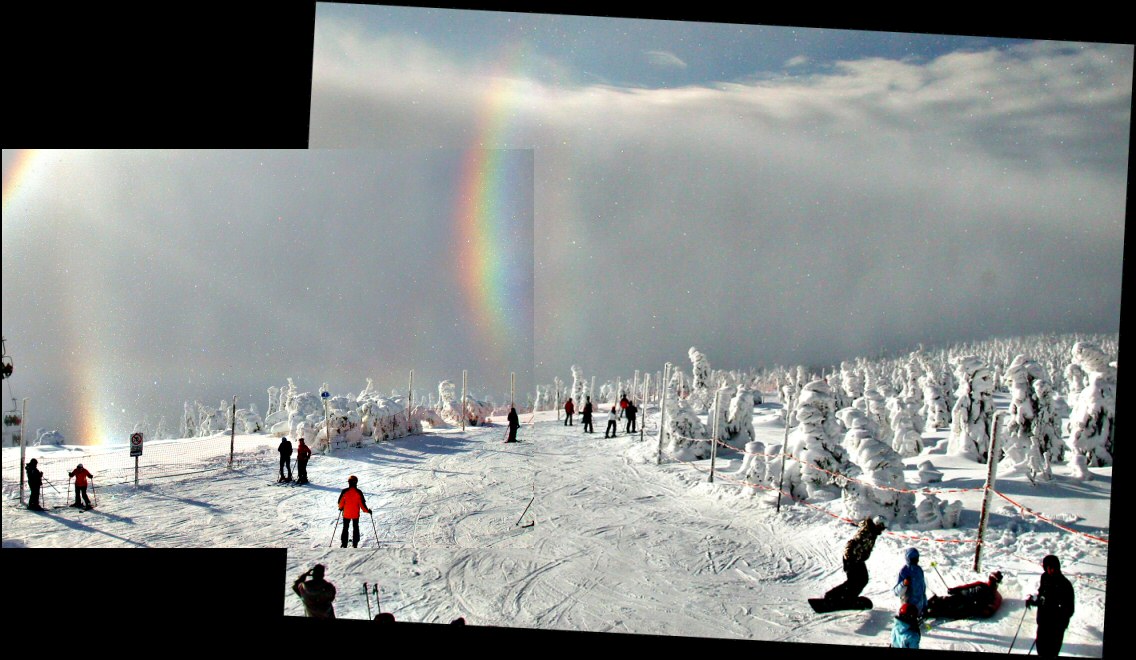

The display was observed at the upper boundary of the stratiform layer; weather conditions: 06:00 UT - air temperature -6,8°C, air relative humidity 96%.
Credit to Hermann Scheer for giving the permission to show his images at Crystal Halos Blog under this licence: ( 10 ). Homepages of Hermann Scheer: ( 11 - 12 - 13 ). This diamond dust display is described on the page "Atmospheric phaenomenons observed in Austria" too: ( 14 )
Karl Kaiser
2010. szeptember 22., szerda
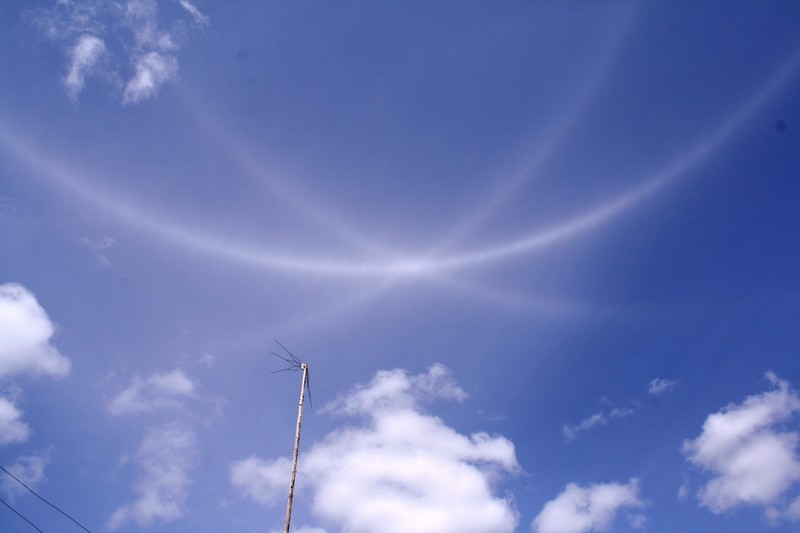
Wegener from Altai Krai
2010. augusztus 4., szerda
Hungarian odd radii
Feliratkozás:
Bejegyzések (Atom)