2010. november 10., szerda

Superb Lowitz and helic arcs from the USA

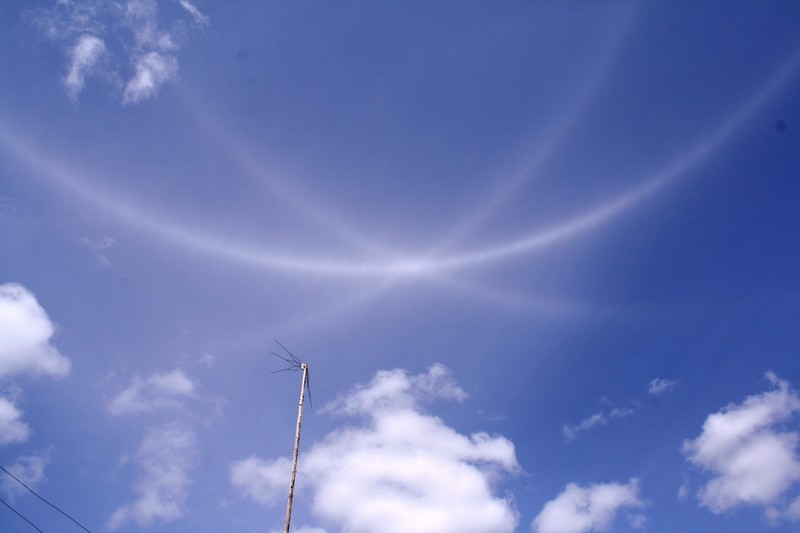
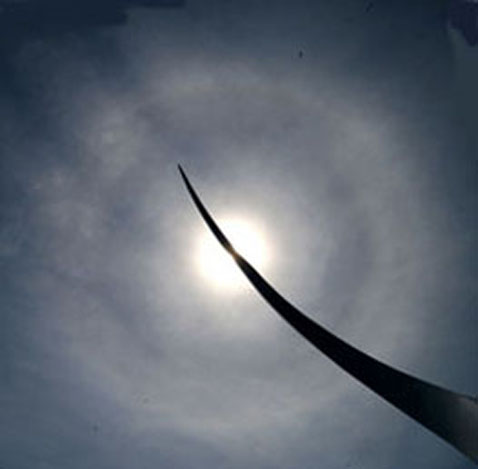
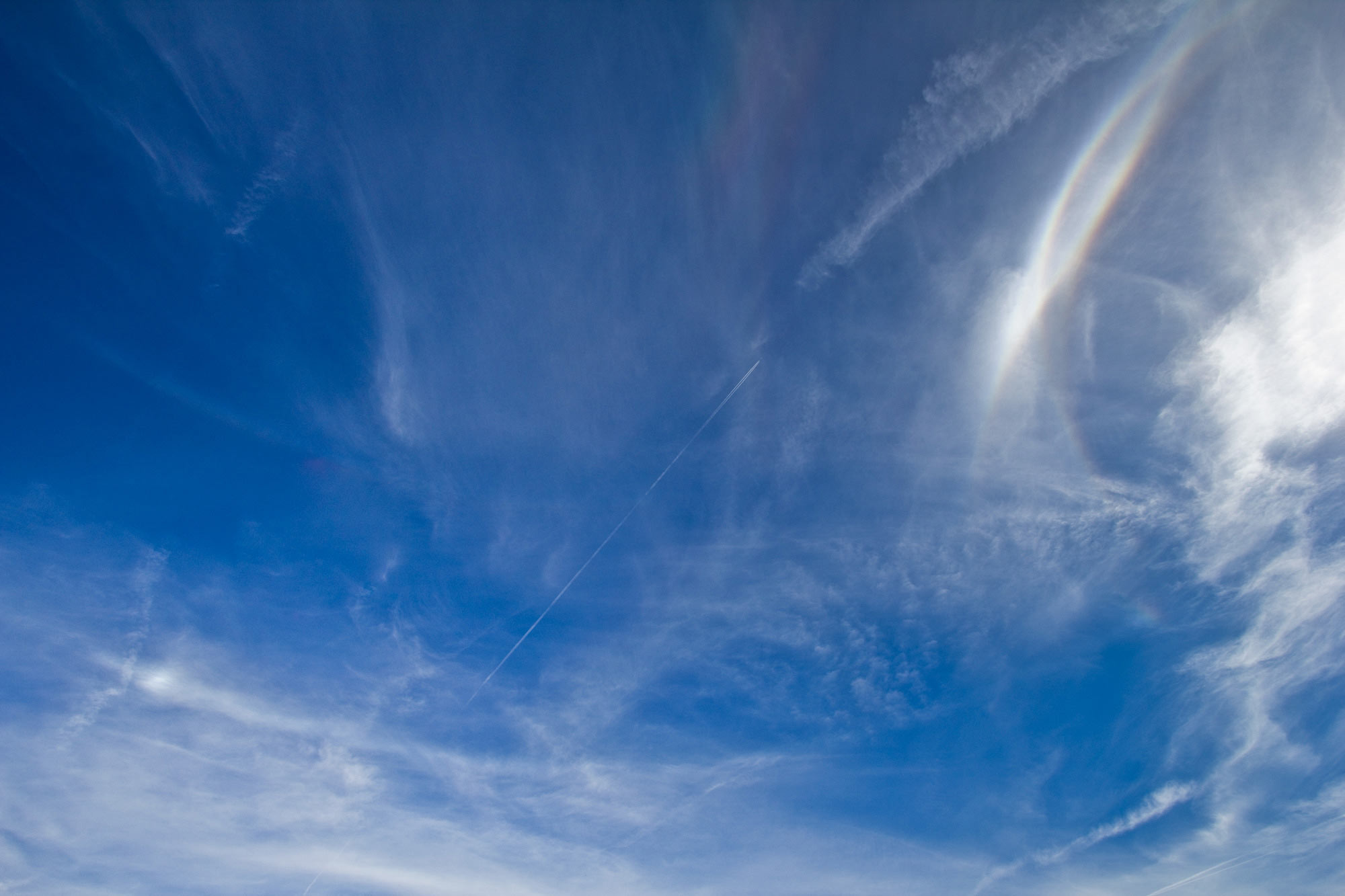
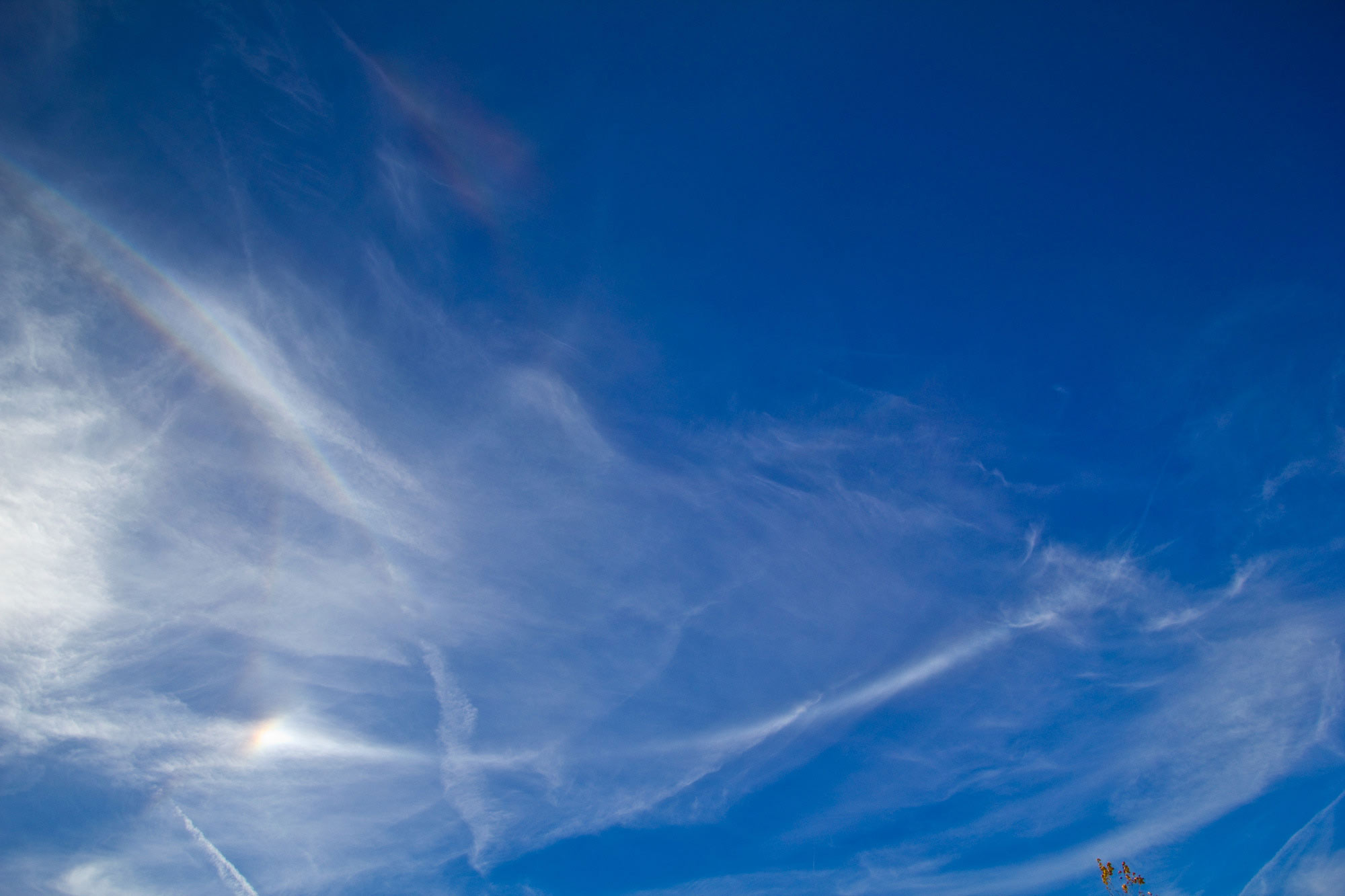
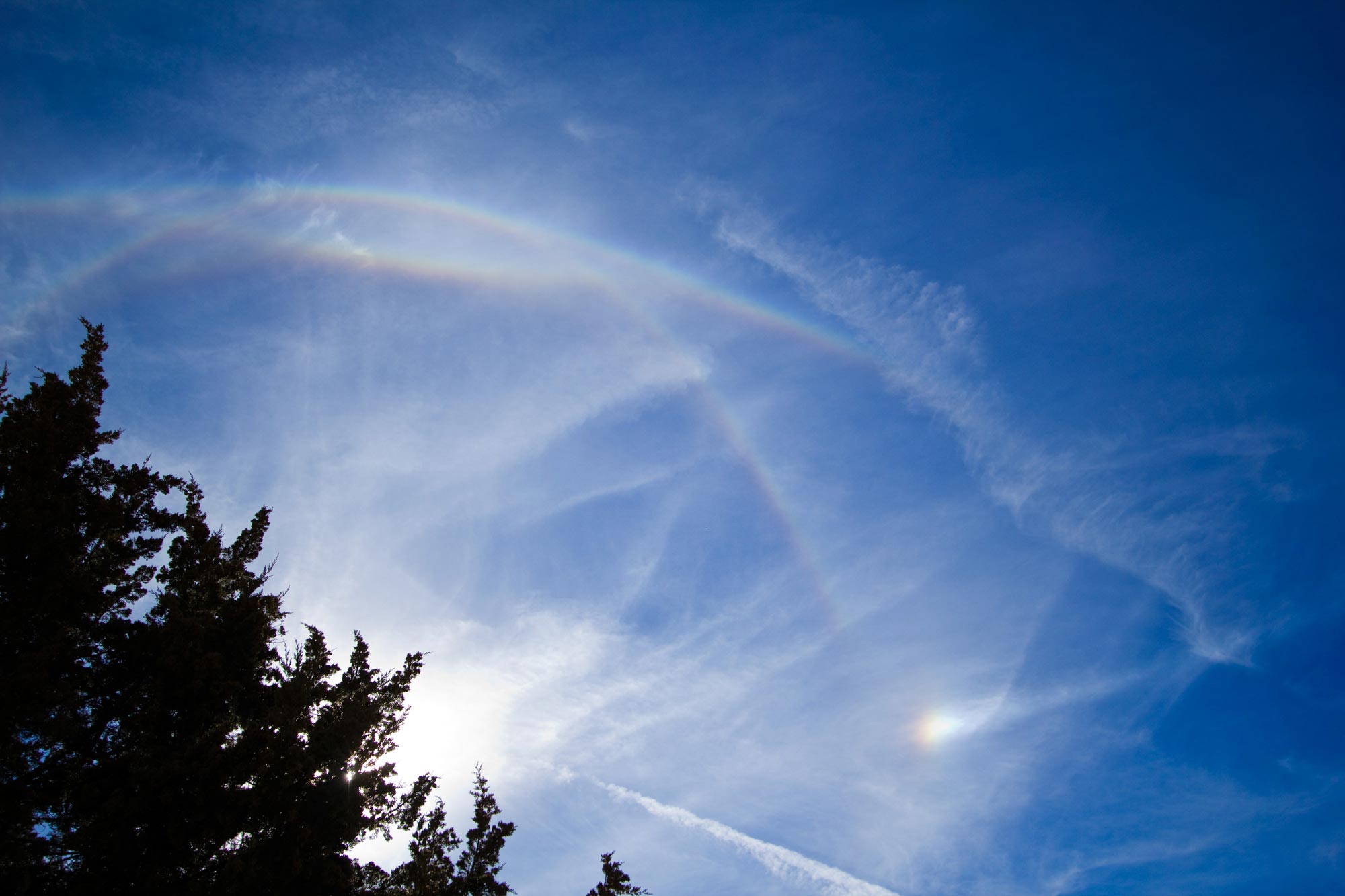
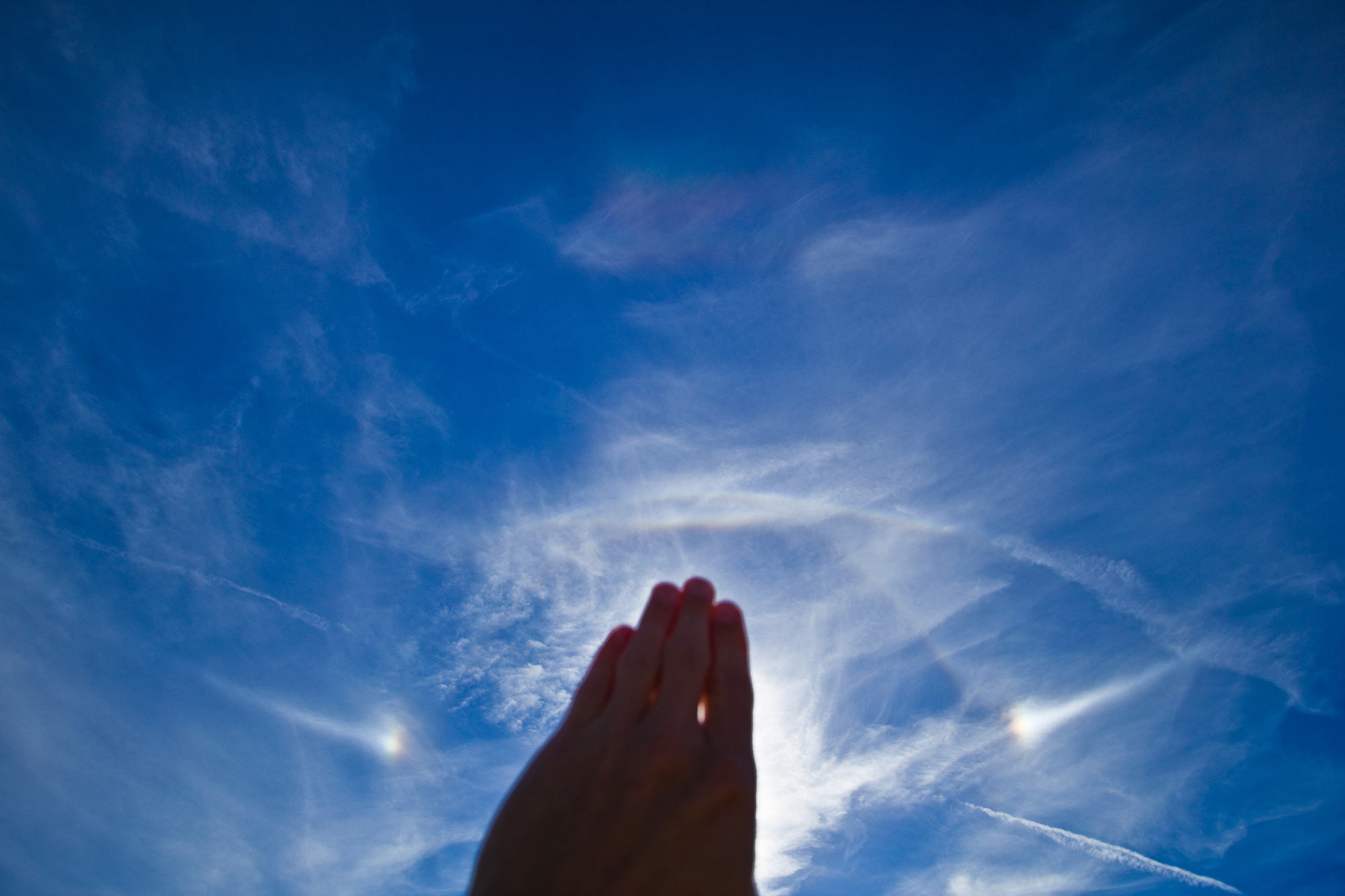
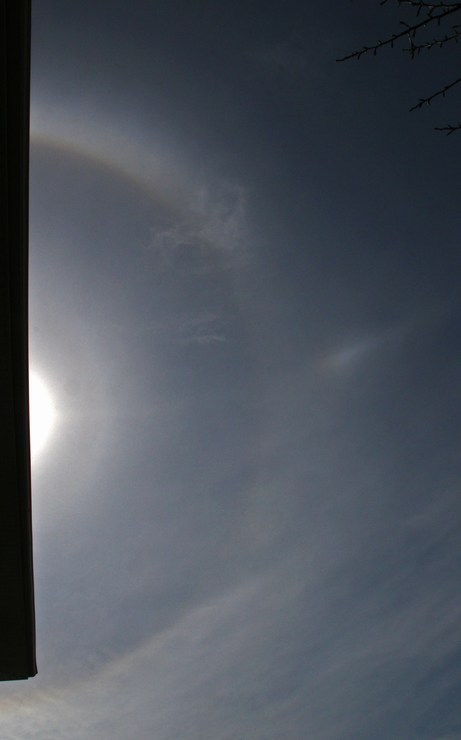
The display was seen at and/or just after high noon from eastern Nebraska about 41 degrees north, on November 7. My sister had called about some geese at a refuge nearby and wanted to go photograph them. I was going to visit my parents, like I often do, and decided I may as well take my camera gear with so if I went to the refuge I'd not have to stop back home. This is the only reason I even had photo gear with me. I stepped outside to do something, and right away saw the parhelic circle extending out a ways, something I've never seen before and I have at least seen a number of optics displays now (lunar fog bows, light pillars, lunar vivid coronas, etc)....so I look often enough for stuff. I pointed it out to my uncle as I sprinted for my car to get my gear and he thought, "it's not just a cloud". I said no, it's an arc, watch. I took my camera and sprinted up the hill behind the house.

I soon was seeing "sun dogs" on the parhelic circle. I then was clearly seeing the Wegener arc inside the parhelic circle. It was very vivid as with my eyes I could clearly see the rainbow colors. To be honest I never did see the Heliac arc before. I was flipping through pictures inside later and it simply jumped out. I was like, what is that arc..then looked it up.

The top of the 22 degree halo visually looked crazy most of the time. Very clear and colorful and odd arcing. I thought it was just an intense circumscribed arc in there but it didn't look placed right and like more was happening. ( 1 - 2 - 3 - 4 - 5 )

The show only lasted 30-40 minutes I'd guess. Then it was pretty hard to get any optics at all. What was strange was visually nothing much was changed about the sky. I was watching for hours so there were different periods of less contrail garbage blocking out the sun. I had friends in Omaha, 20 miles south, and Lincoln another 45 miles south of that, looking too. They never saw anything good. They watched till sunset too, but they also didn't get out as soon as I was and that was the best part. I wonder what I missed before I got out.

The satellite loop for that day may give the key ( 6 ). I'm located in eastern NE which is at the top center. It was much like the crystals you get right behind a blizzard in air just where it is clearing behind the storm. You can see a more puffy nature to the clouds, they pass and the ice crystals are left in the air. That stuff on satellite is below typical cirrus level/flight level...but still up there. It for sure was different than normal cirrus. A lot of that "cirrus" in the shot is left over form all the contrails. Once the sun got lower you could see the moisture/clouds clearly below the contrails. So anyway, probably worth noting the clouds coming across at the time were more along the lines of mid-level clouds/moisture.

Mike Hollingshead

2010. október 30., szombat

Superb diamond dust display in Austria


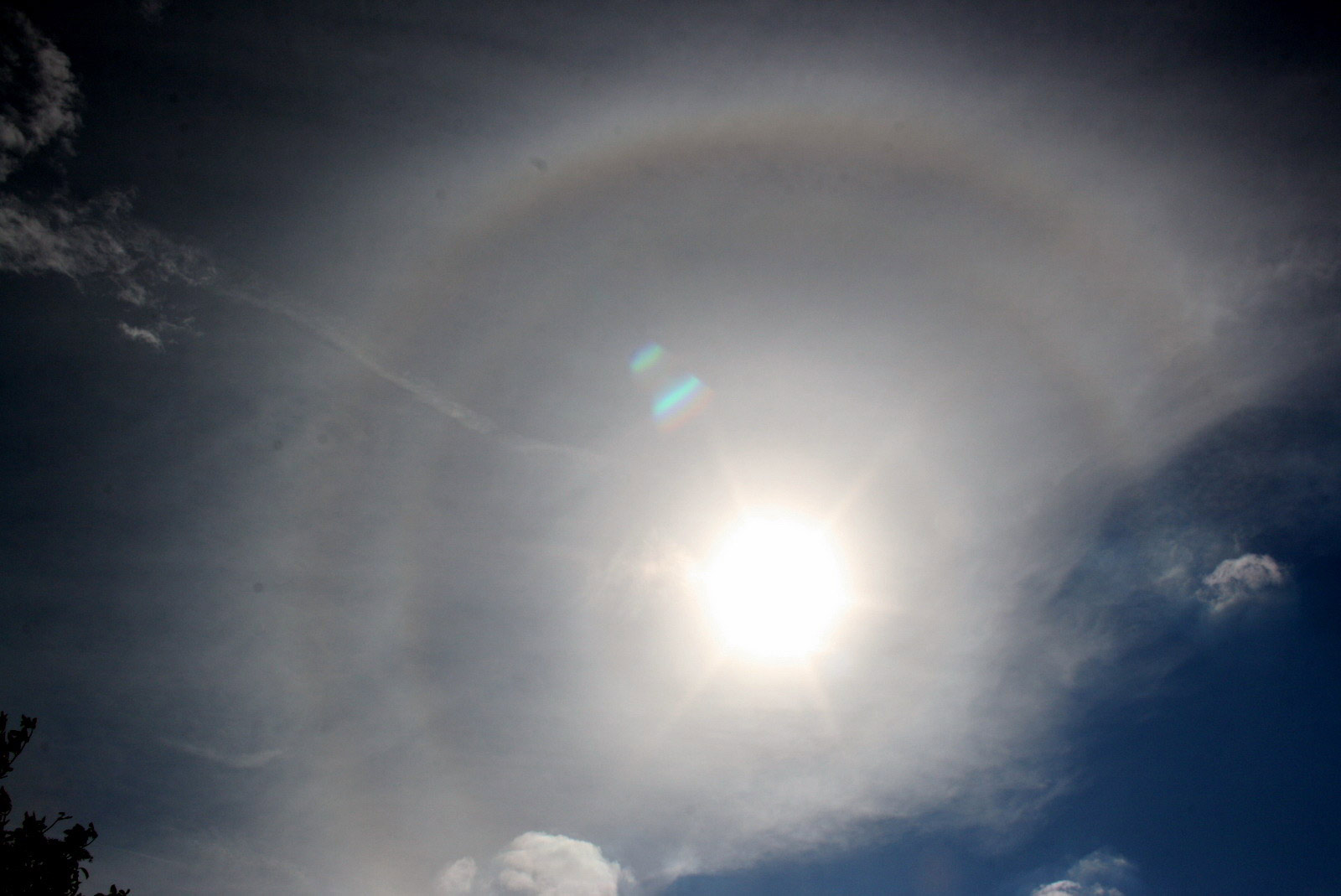
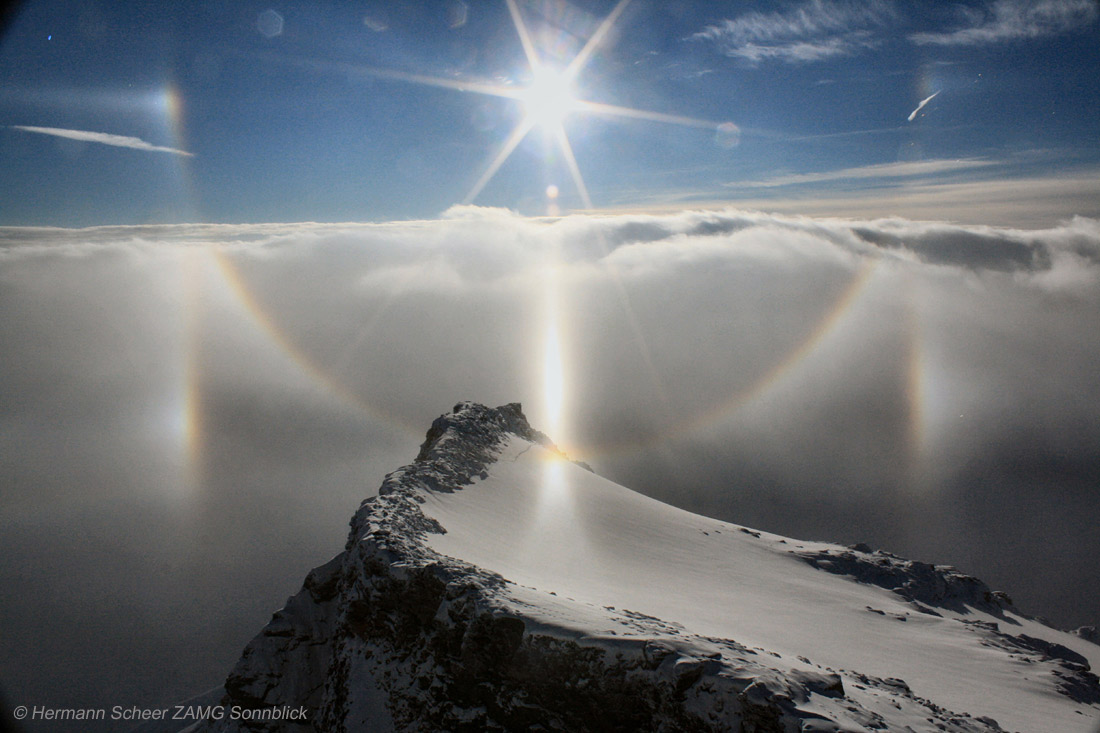
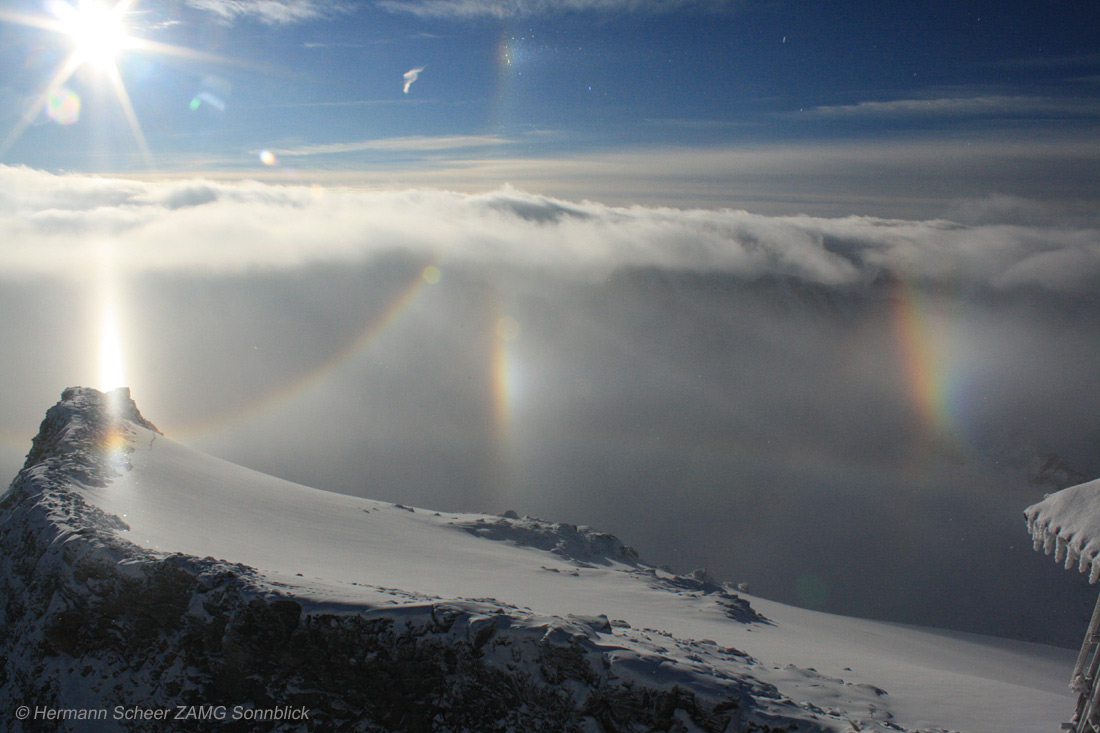
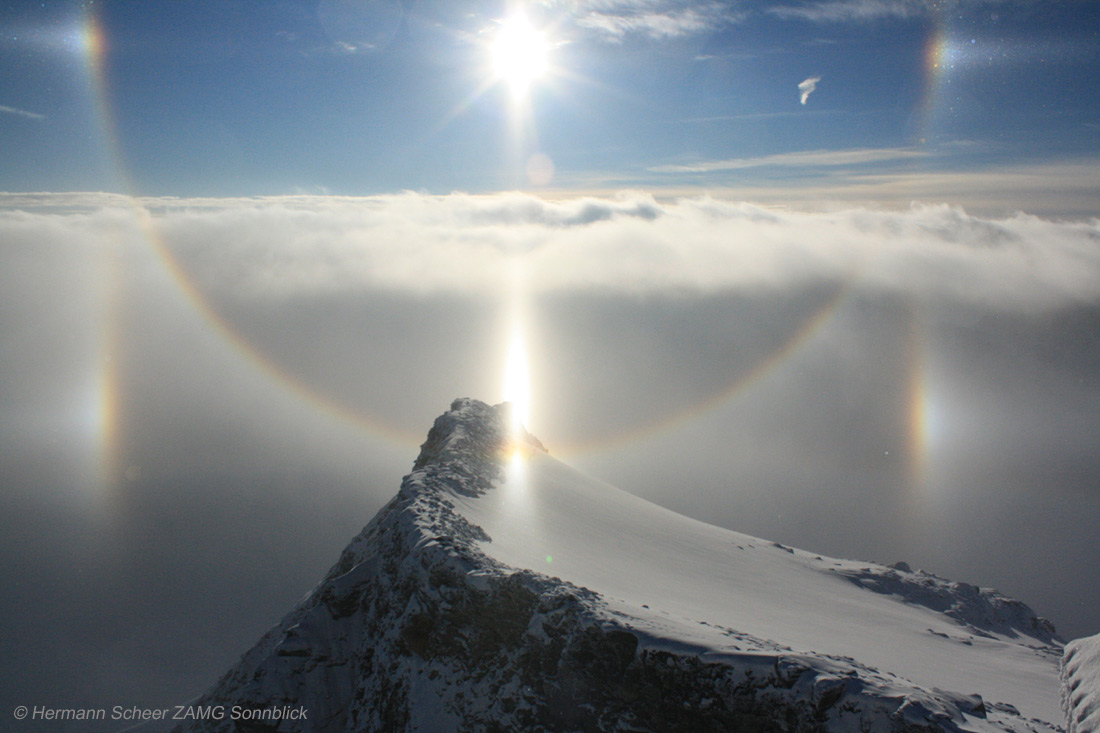
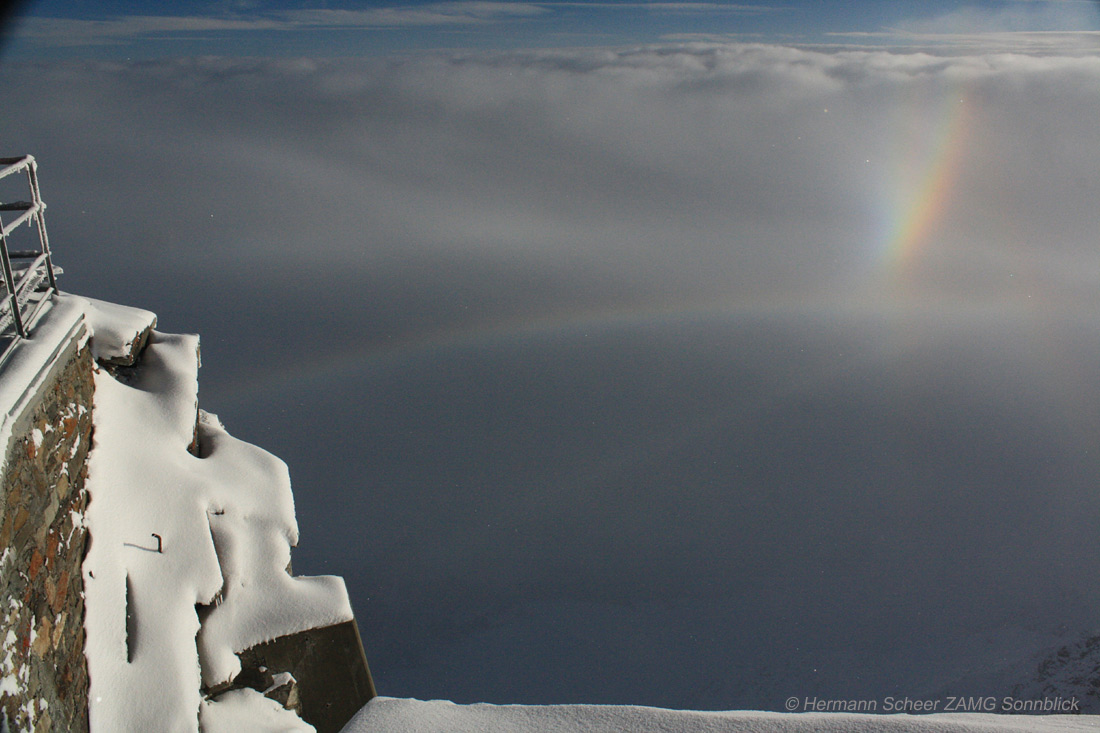
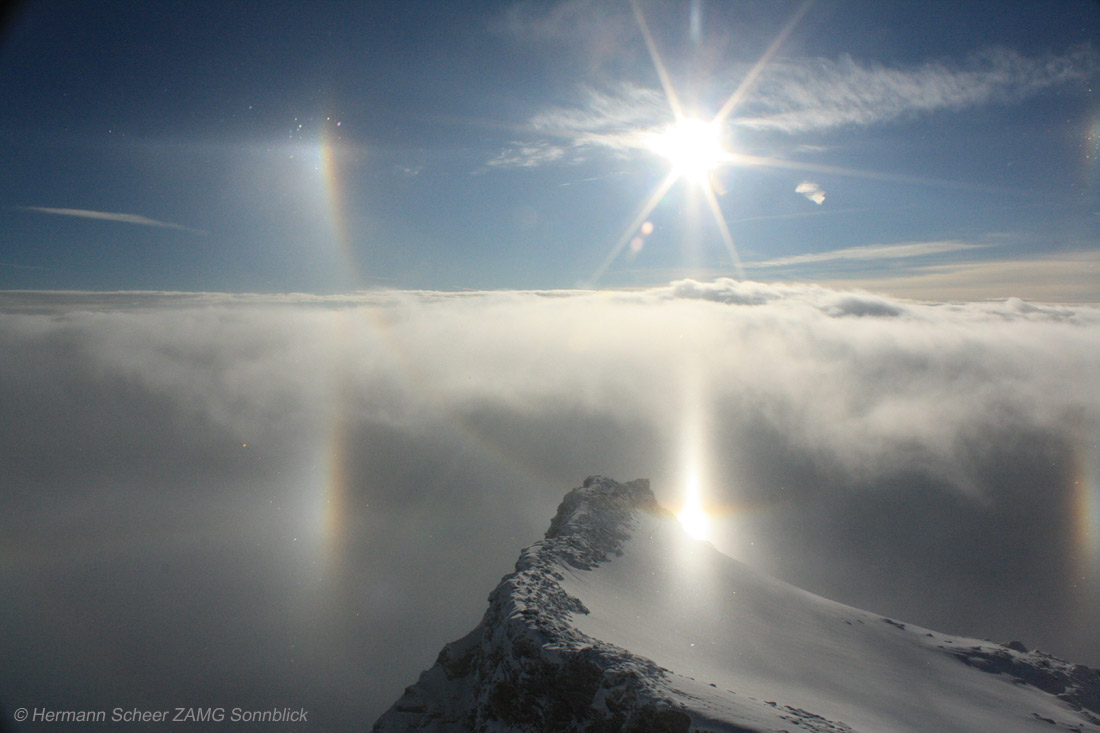
On 18 October 2010 a superb diamonddust halodisplay was observed at the meteorological station Sonnblickobservatorium ( 1 ) in the Austrian Alps (3106 m, 12°57’ E, 47°03’ N). Hermann Scheer, member of the meteorological team at the observatorium, took images of 13 different haloforms between 08:30 and 09:00 CEST (06:30 and 07:00 UT): parhelia, 22°-halo, 46°-halo, lower tangent arc, subsun, subparhelia, infralateral arc with Parry-infralateral arc, supralateral arc, parhelic circle, subparhelic circle, subhorizon Wegener arc and helic arc. ( 2 - 3 - 4 - 5 - 6 ) The images were taken at a sun elevation of 8,9° to 10,3° between 08:31 and 08:40 CEST, the file names indicate the exact time.

The brightness of the Wegener arc was incredible. Very interesting is the combination of Parry-infralateral arc with infralateral and faint supralateral arc. This part of the phenomenon is similar to an observation in the Czech Republic (26th of December, at Lysa hora in Krkonose (Giant Mountains)), described at Optické Úkazy v Atmosférè ( 7 - 8 ) Thanks to Tomas Trzicky for the links. And also in Ice Crystal Halos ( 9 ). In this very small area of the display we can see a 46°-halo, Wegener arc, helic arc and the subparhelic circle too.

The display was observed at the upper boundary of the stratiform layer; weather conditions: 06:00 UT - air temperature -6,8°C, air relative humidity 96%.

Credit to Hermann Scheer for giving the permission to show his images at Crystal Halos Blog under this licence: ( 10 ). Homepages of Hermann Scheer: ( 11 - 12 - 13 ). This diamond dust display is described on the page "Atmospheric phaenomenons observed in Austria" too: ( 14 )

Karl Kaiser

2010. szeptember 22., szerda

Wegener from Altai Krai

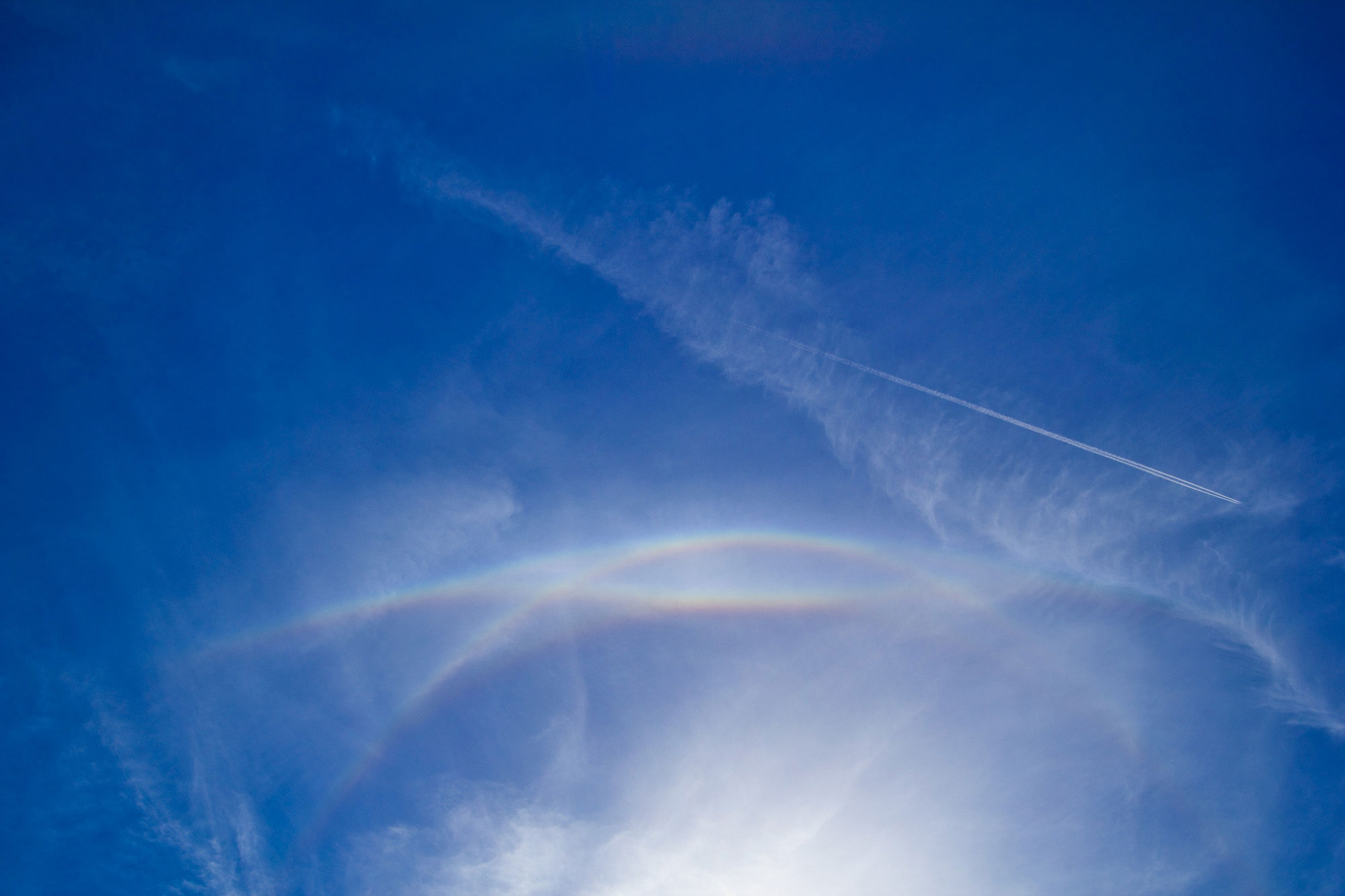
The photo of these Wegener-arcs was taken in the Siberian Altai Krai by Alexander Kostenko on 12 August 2010. Further images can be seen in his album ( 1 )

2010. augusztus 4., szerda

Hungarian odd radii

These odd radius rings and arcs were photographed on 24 July 2010 by Róbert Rosenberg in Adony, Hungary. The photos were taken a few minutes after 14:35 CEST, and about two hours later. ( 1 )

2010. július 24., szombat

Moilanen arc without snowguns

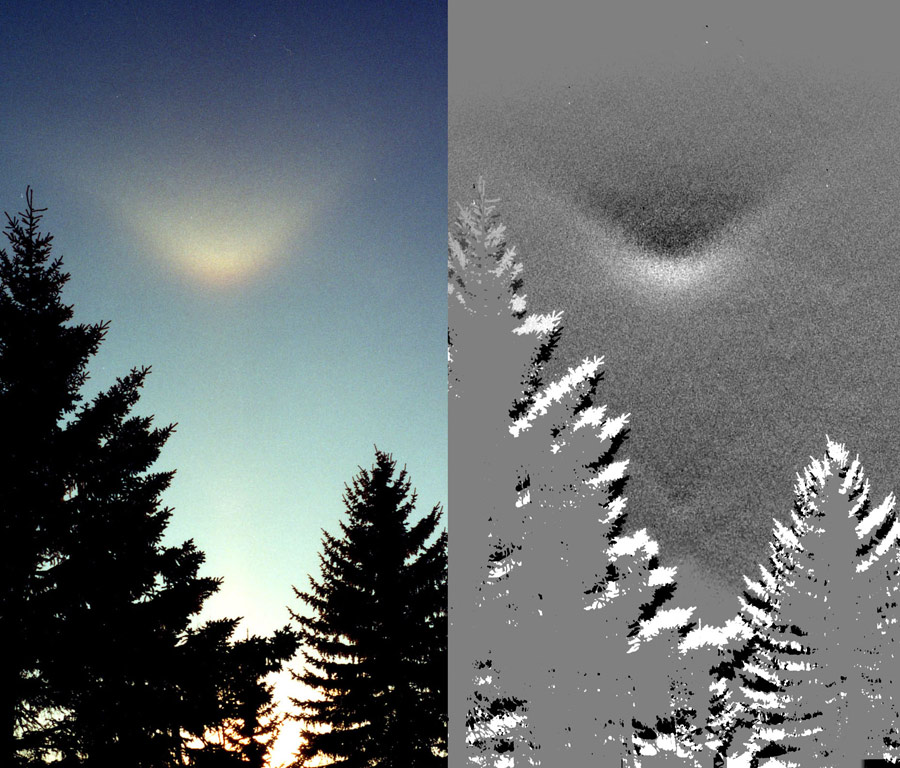
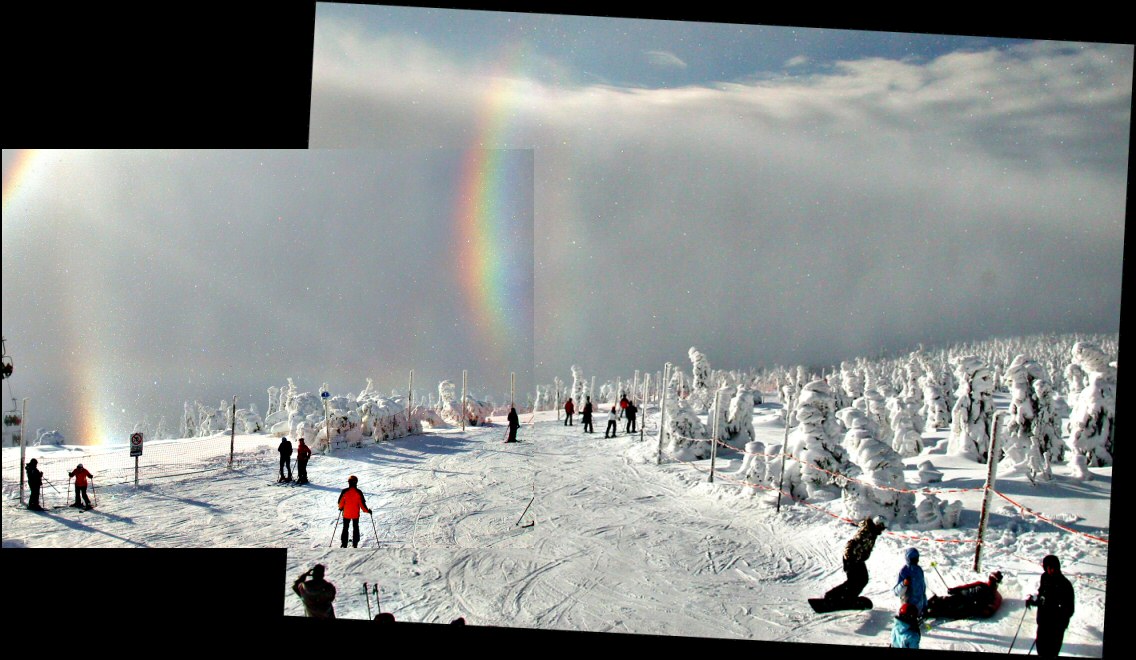
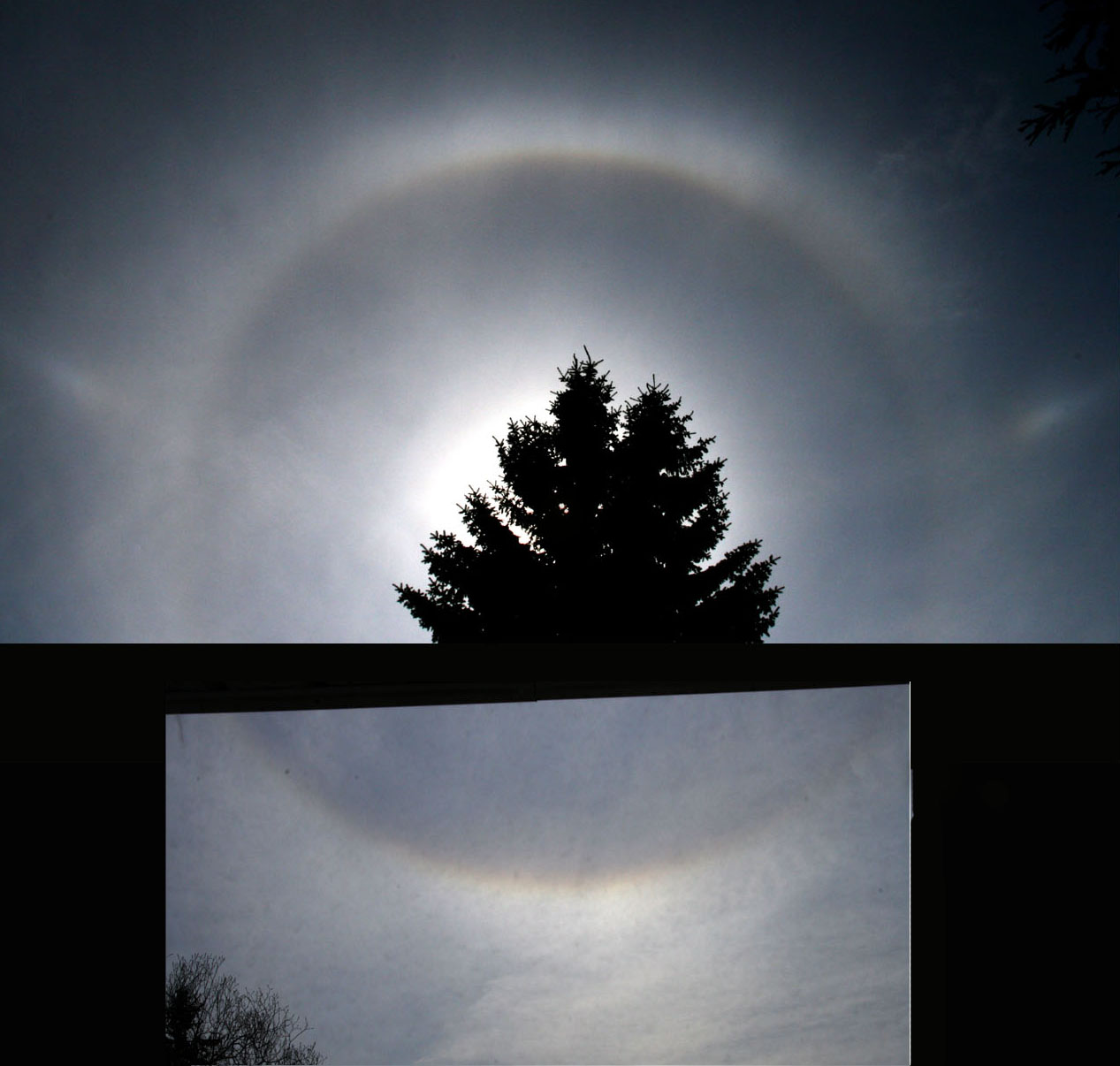
I was recently filing images digitized from somewhat older slides and came across this upper tangent arc image from many years ago, in the early morning from here in Calgary. I decided to subject this image to some processing, in particular, embossing the image in Photoshop and low and behold, a faint Moilanen arc showed up, as you see in this composite image!

I certainly do not live anywhere near to a ski slope or factory chimney that would produce lots of ice crystals. There is no evidence on the photo of local ice crystals as we see often in diamond-dust displays. The climate here is very dry and we often find low-lying layers of diamond dust particularly over our river.

Thus, I hesitate to claim that this is a "natural" Moilanen arc but it was not taken near to ski slopes. Maybe our furnaces produce the requisite crystals sometimes, in which case I will be on the lookout next winter for a repeat of this display.

Alan Clark

2010. július 6., kedd

Suggestion of observation: possible spurious arcs from Moilanen crystals

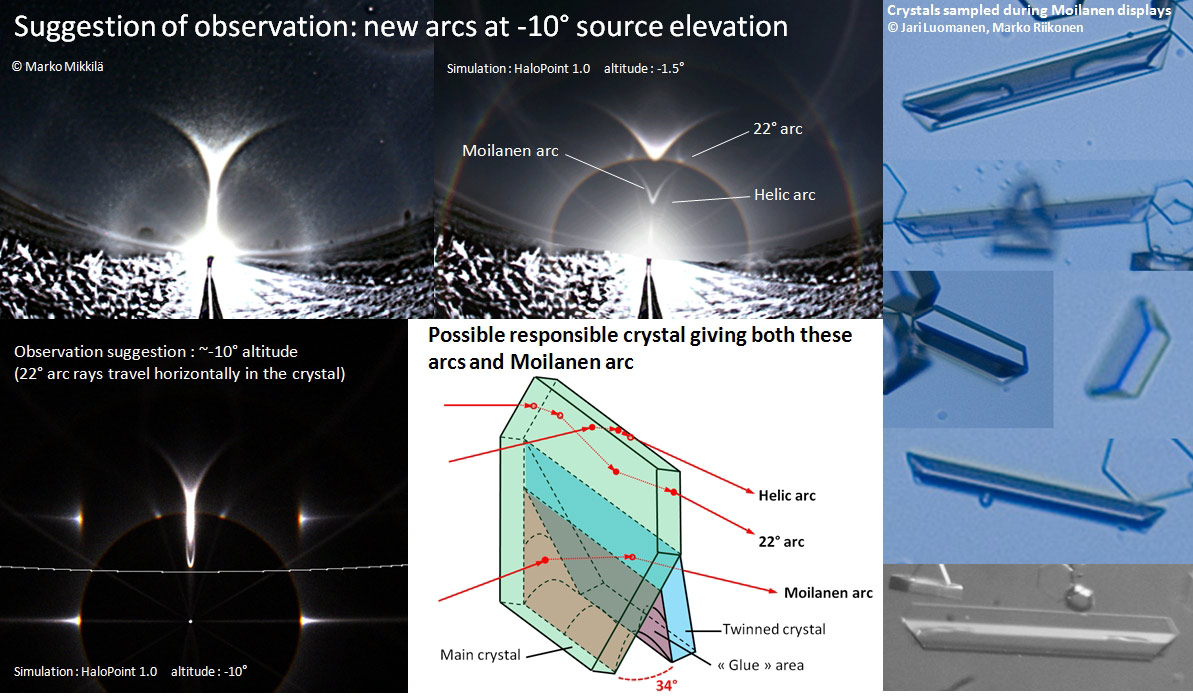
Here is an observation suggestion for next winter. Marko Mikkilä photographed possible new arcs during winter 2007-2008 ( 1 ). Source elevation was -1.5°. Different processing shows them as not only 22° arcs but also new helic arcs.

Some twinned crystals allow creating both similar arcs and Moilanen arc so these arcs could be spurious arcs from Moilanen crystals. Such twinned crystals are present in small amount in samples from Moilanen display. I have put the best images in the main picture. The crystals seem to be two twinned plates with a glue area in between them. Even few of these crystals could give significant Moilanen arc as the ray path is extremely efficient, even more efficient than parhelia ray path (for a plate crystal, rays go mostly in the helion, then in the left/right parhelia/subparhelia and parhelic/subparhelic circle while almost all the rays entering such twinned crystal go in the Moilanen arc (not in the helion)). The 22° arcs would be from rays entering and leaving the small upper tilted prism faces (with total internal reflections in between). The helic arc is mostly from total internal reflection on the small upper prism face.

Some reasons also tend to show that the actual fall orientation of such crystal is with the prism pointing up (and not pointing down like it was thought before).

If this is true, we can deduce that best configuration to see these arcs again is with source elevation around -10°. In this case, 22° arcs rays travel horizontally inside the crystal and so are more likely to exit (as the main habit of the crystals seems to be long needles), helic arcs should also be stronger, and tangent arc is narrow (so well separated from these arcs). However Moilanen arc should be difficult to distinguish from subsun and divergent light pillar.

For similar lower arcs, the best configuration would be source elevation around 10°. However lower arcs are less likely because of the “glue area” messing with the basal faces for total internal reflection.

It would be really interesting for people who have the opportunity to try to get other observation of these arcs next winter. They should be most visible at source elevation around -10° and vanish quickly for positive source elevation. If these arcs are spurious arcs from Moilanen crystals, it would definitely help finding the responsible crystals.

Nicolas Lefaudeux

2010. július 2., péntek

Odd-radii again

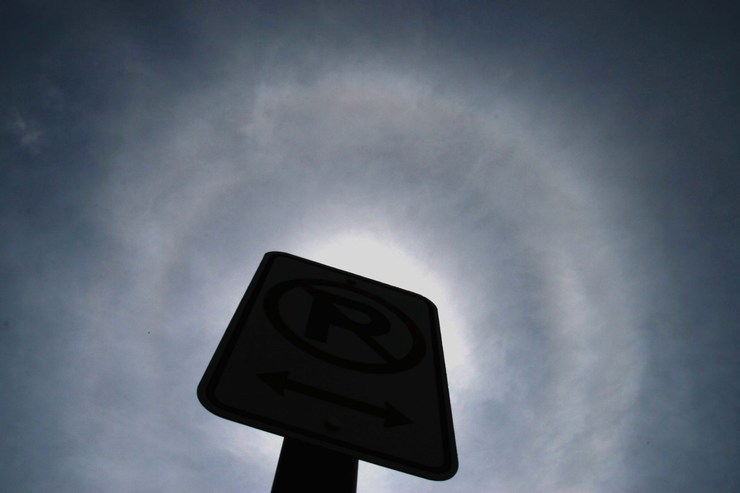
Alan Clark sent the above image, which shows the same display that Elmar Schmidt saw from Virginia, and which can be read about in the previous post. Alan photographed the halo from Dulles Airport, about 120 km NE of Elmar's site. The Sun elevation was about 58 degrees, and it was between 15:00 to 16:00 local summer time. As Alan says: "The display was not perhaps as clear as Elmar's in that some components of the odd halo were not distinct." ( 1 )

Alan has sent another pair of odd radius halo images. These were taken from Calgary, Alberta, Canada in May, 2009. ( 2 - 3 )