
2008. november 16., vasárnap
Another display with crystals

2008. november 14., péntek
Parry arcs and possible 46° contact arc from Hungary

When the Sun was of 4.1°-4.5° elevation, besides the supralateral arc, another halo patch formed under the CZA ( 4 – 5 ). I automatically took it as part of a 46° halo, but later it turned out that it might as well be 46° contact arc. As contact arcs are formed by Lowitz-oriented crystals, I had a closer look at the top of the 22° halo (what was outside the thick cloud), and unsharp masking of photos revealed lines that may be Lowitz arcs – if not jpg artefacts. It must be noted that all these images were taken about 5-7 minutes before the halo patch appeared. ( 6 - 7 ).
2008. november 10., hétfő
Beginning of diamond dust season

The diamond dust season began in Rovaniemi on the night of 1/2 November with three snow guns running in the ski jump. Here is one of the displays photographed that night. It is noteworthy that the crystals have cavities in their ends and yet the halos requiring basal faces are strong.
2008. október 18., szombat
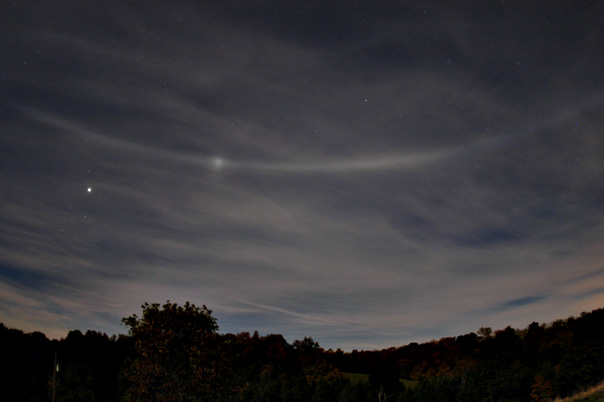
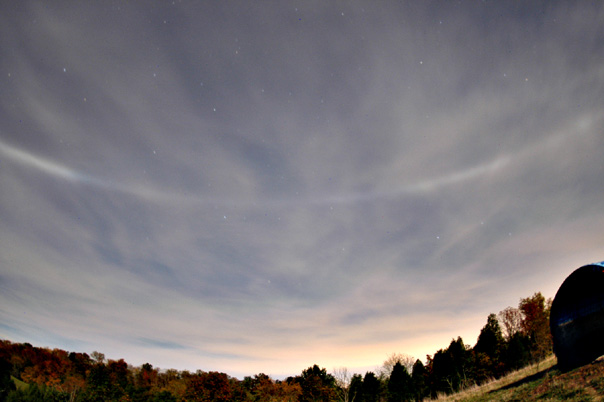
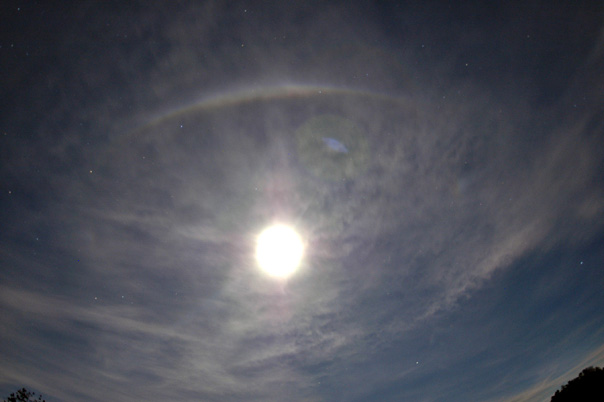
Long lasting column and plate halos with Lunar Wegener arc
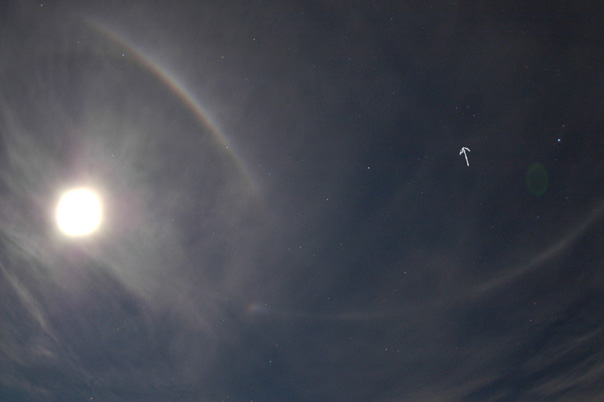
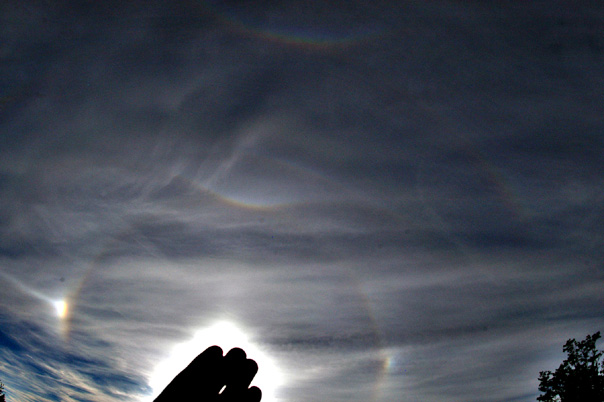


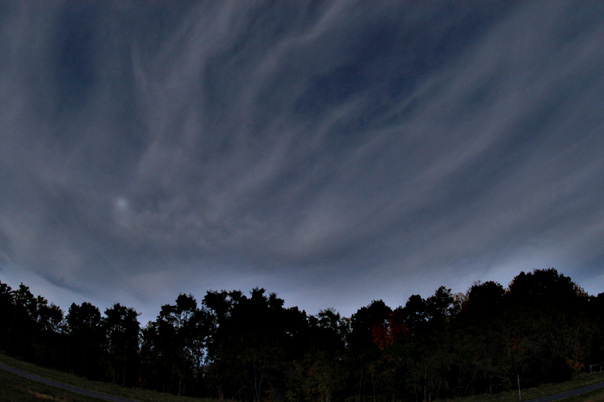
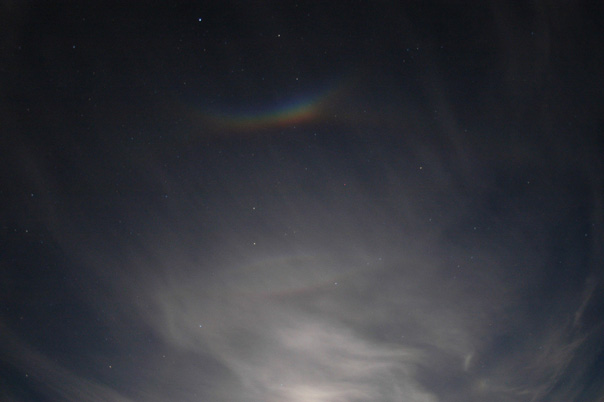
The show was not over yet because the Moon came up and there was 22° halo, upper tangent arc with parry arc, supralateral arc and CZA ( 5 ). Later on I looked away from the Moon to see bright and complete parhelic circle and very bright 120 degree parhelia ( 6 ). I also got to see blue spot very clearly ( 7 ). When the Moon got high enough for the circumscribed halo and Parry to merge I continued to shoot photos. Now here's the real shocker: the next day I looked at the batch of these lunar halo photos and I found a Wegener arc ( 8 )! I could not believe it. I also looked for heliac because the Parry arc got quite bright ( 9 ) but it was not to be found.
2008. szeptember 18., csütörtök
Odd radius halos on 8th May
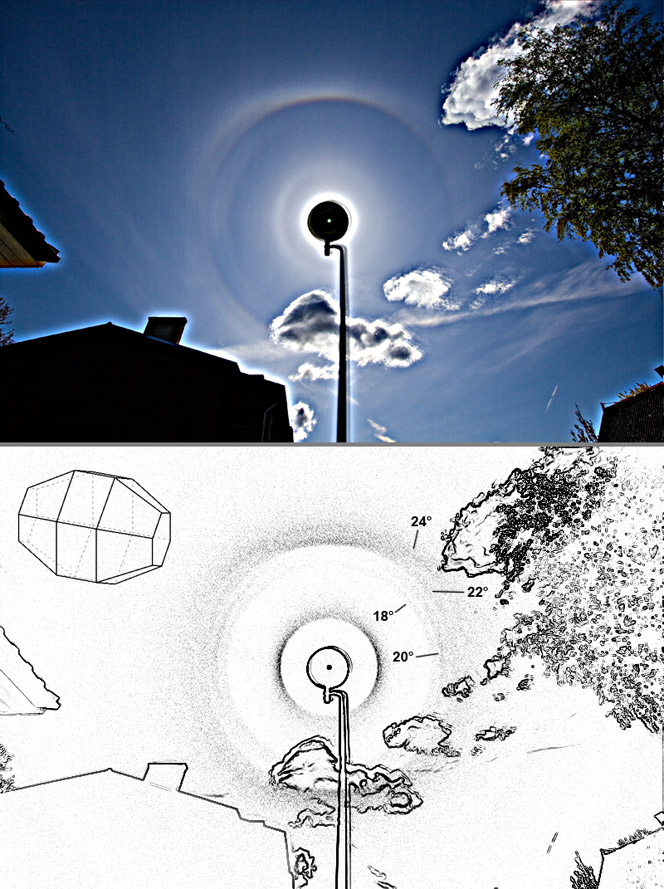
The photos of this diplay got lost somehow and then found again deep inside my harddrive.
The display shows 9, 18, 20, 22 and 24 degree halos, also 9, 20 and 24 column arcs.
This photo is 9 image stack shot at solar elevation of 46.7 degree and the simulation provided by M.Riikonen is made according to this. Pyramidial columns were used with 14 degree tilts plus crystal populations for 22 halo and its tangent arc.
2008. szeptember 14., vasárnap
Blue spot from Vecsés, Hungary
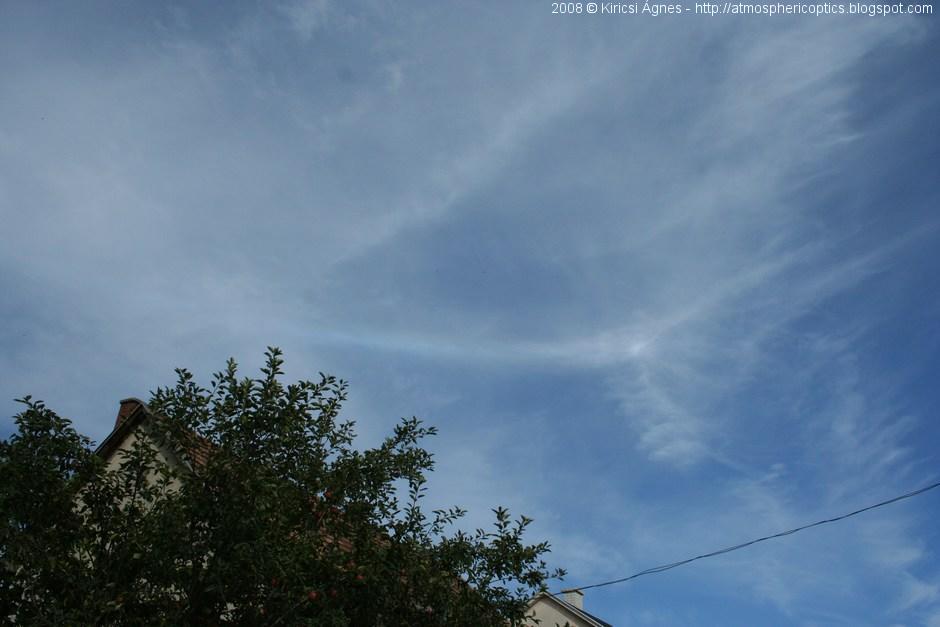
The image above shows the blue spot on the parhelic circle, photographed on 1 September in Vecsés, Hungary. Click the picture to see the colours in the original version. Its hue seemed almost electric blue compared to the white parhelic circle, and was really conspicuous even to the naked eyes ( 1 – 2 ).

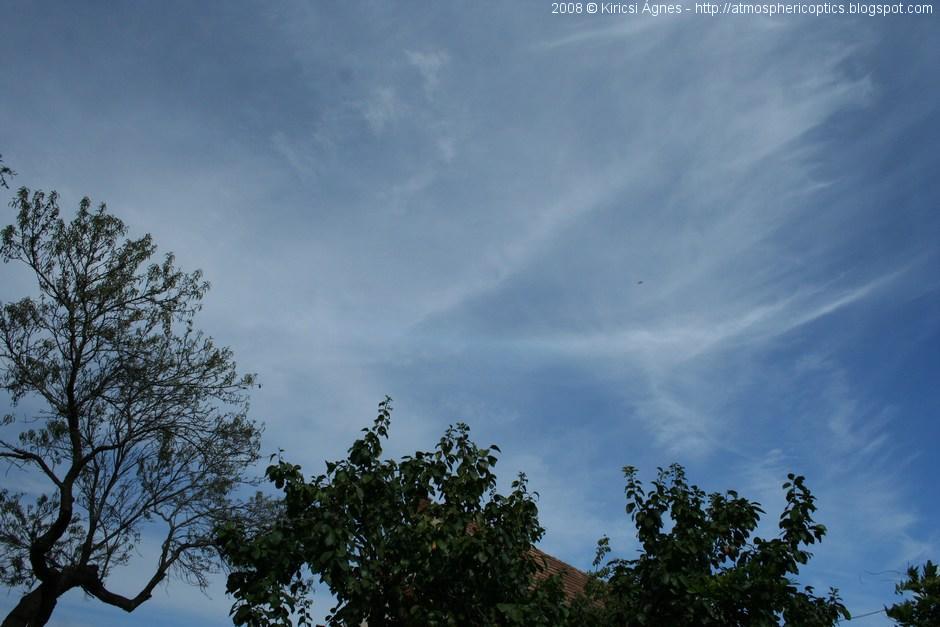
The blue spot can only be observed when the Sun is lower than 32°. It is a halo phenomenon that changes its position and length with solar altitude. When the Sun is 5° high, the blue spot is at 115° azimuth and only 2° long. At solar elevation 25°, it moves to 135° azimuth, and when the Sun is at 32°, the blue spot is positioned in the anthelic region, reaching 180° azimuth and 10° length.
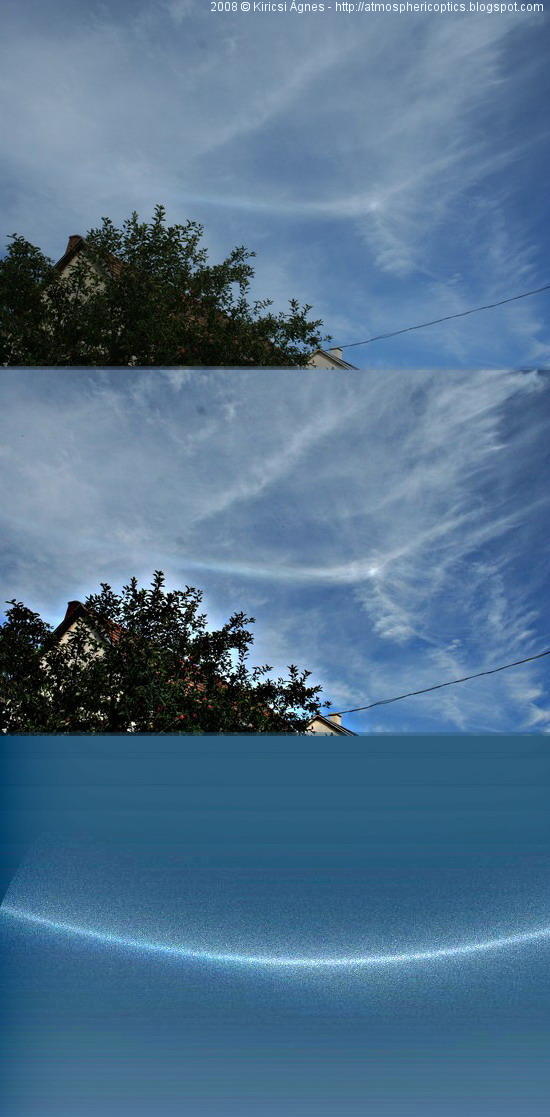
My images were taken between 16:06 and 16:10 local time. The solar altitude in this period was between 32-31°, meaning that the blue spot was in its longest phase and exactly opposite the Sun. The simulation made with HaloSim reveals the position of the blue spot as compared to the 120° parhelia. The crystal population I used was hexagonal plates with 2° tilting angles ( 3 ). The composite image shows the original photo with unsharp masked image and simulation ( 4 ).

The 1 September display lasted a couple of hours. Besides the full parhelic circle, and other, more common halo forms, there was a long-lasting stage with Parry oriented crystals, and another stage with a 46° halo – this latter one was observed by Alexandra Farkas. For further images of the diplay, see Alexandra Farkas’s and my website ( 5 – 6 )
2008. szeptember 13., szombat
Odd radius halos in Nydek
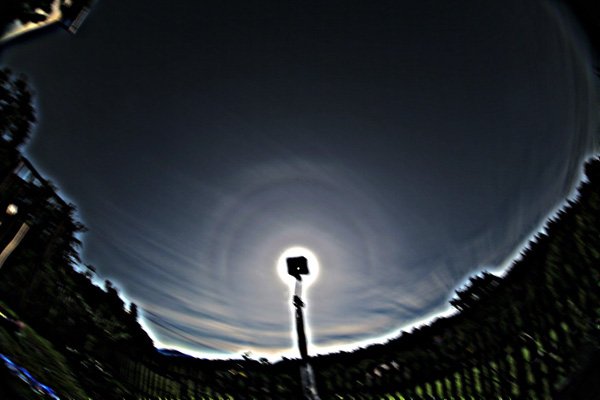


The phenomena formed in thick cirrostratus clouds before the arrival of a warm front. Some meteorogical data are also provided ( 3 - 4 ).


Text: Martin Popek, Matej Grek
Feliratkozás:
Bejegyzések (Atom)